Roof Pitch Calculator — Quick, Accurate Roof Pitch Measurements
Understanding your roof pitch is essential when selecting the right roofing materials, ensuring proper drainage, and complying with building codes. A roof pitch calculator simplifies the process, providing accurate measurements in just a few seconds. Whether you’re a homeowner, property manager, or contractor, knowing your roof’s pitch is crucial for making informed decisions. Let our roof pitch calculator save you time and guide you toward the best choices for your roofing needs.
At OC Roof Kings, we understand the importance of getting every detail right when it comes to your roof. For expert advice and reliable service, give us a call at (949) 561-2069. We’re here to help you with all your roofing needs!
What Is Roof Pitch?
Roof pitch refers to the angle or slope of a roof. It is often expressed as the ratio of rise over run (the vertical distance over the horizontal distance). The roof pitch can be represented in various formats, such as:
- Rise/Run (e.g., 6/12)
- Fraction (e.g., 1:2)
- Degrees (e.g., 26.57°)
- Percent Slope (e.g., 50%)
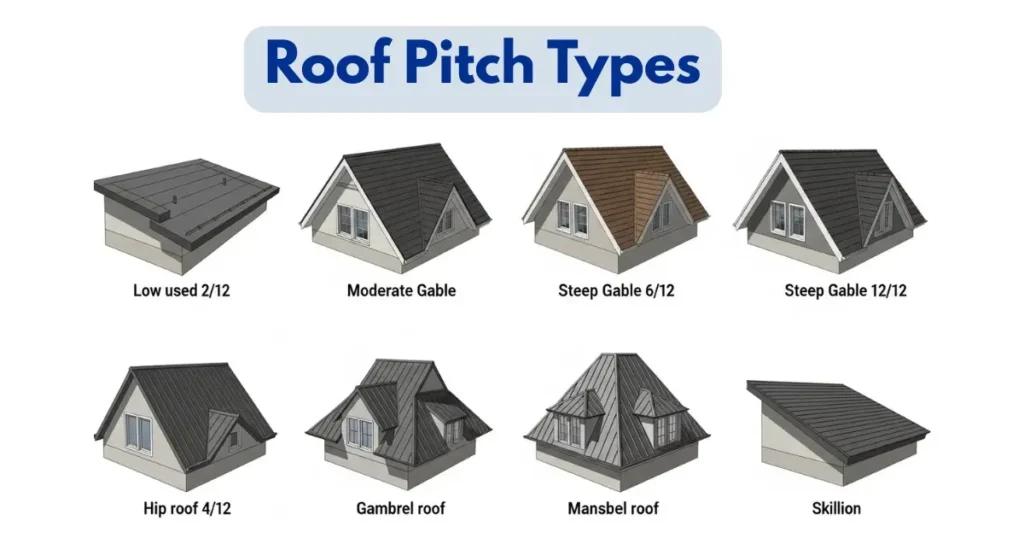
A roof’s pitch is critical for determining how well water will drain off the roof, which impacts material choices, roof longevity, and energy efficiency. Pitches are classified into three main types:
- Low-slope roofs: Pitch of 2/12 or less, often used for commercial buildings.
- Medium-slope roofs: Pitch of 4/12 to 7/12, common in residential buildings.
- Steep-slope roofs: Pitch above 7/12, ideal for shedding snow and water.
How to Measure Roof Pitch
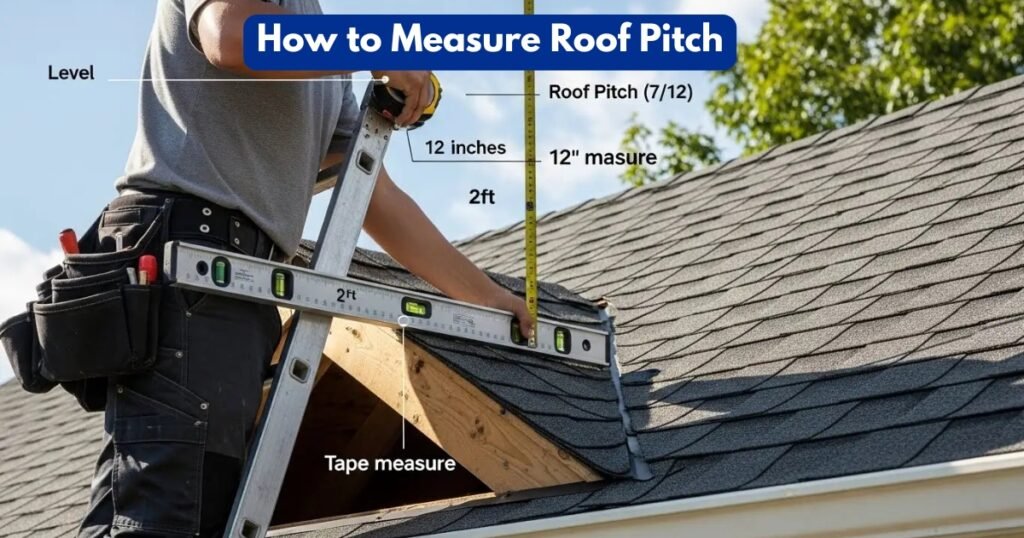
To measure your roof pitch, you’ll need a few basic tools:
- Level: Ensures accurate measurements.
- Tape measure: For measuring rise and run.
- Smartphone (optional): For calculating or using apps that assist with measurement.
- Ladder safety: Always prioritize safety when accessing roofs.
Step-by-step process:
- Measure the rise: This is the vertical distance from the top of the roof to the point where the roof starts to slope.
- Measure the run: The horizontal distance from the roof’s edge to the point where the rise measurement was taken.
- Calculate the ratio: Divide the rise by the run (e.g., 6 inches of rise over 12 inches of run equals a 6/12 pitch).
Alternative methods for measuring pitch include using a pitch gauge or measuring from the attic. Some advanced methods even allow for photo-based measurements.
How the Roof Pitch Calculator Works
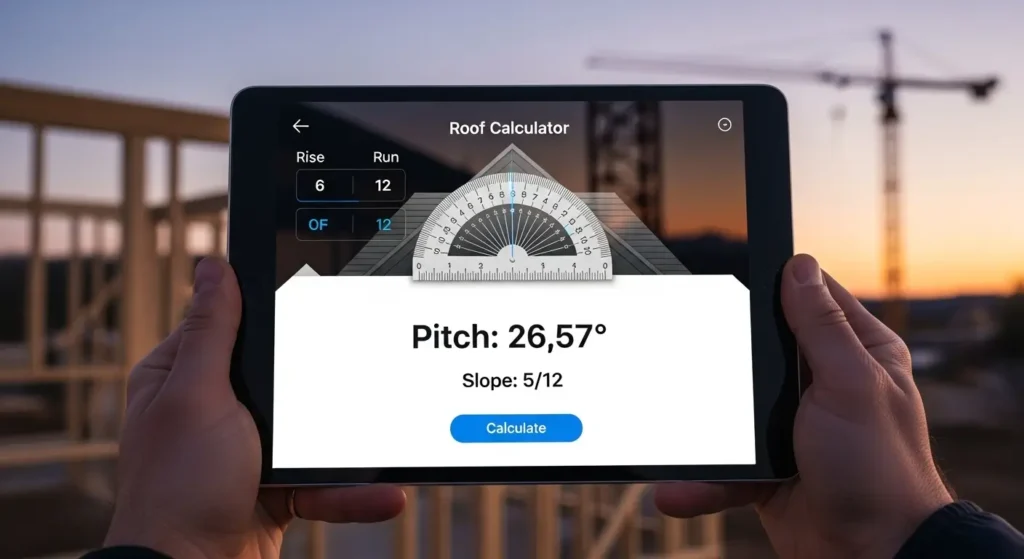
Our roof pitch calculator makes the process effortless:
- Inputs: Enter either the rise and run or span of your roof in your preferred units (inches, feet, millimeters, or centimeters).
- Outputs: Get the pitch roof in rise/run, as a fraction, in degrees, or as a percent slope.
- Formulas used:
- Degrees: arctan(rise/run) calculates the pitch in degrees.
- Percent slope: (rise/run) * 100 gives the pitch as a percentage.
This ensures that you get accurate results quickly, whether you’re measuring for new construction or making repairs.
Using the Calculator
Here are some examples to help you understand how the calculator works:
Example 1:
- Rise: 6 inches
- Run: inches for every 12
- Output: 6/12 (pitch), 26.57° (degrees)
Example 2:
- If you’re working with a roof that has a 30° pitch and want to convert it to rise/run, the calculator will compute the necessary measurements.
Edge cases:
- For flat roofs (0/12), the calculator will indicate no slope.
- For extremely steep roofs (e.g., 12/12 or greater), the calculator will adjust accordingly to show a high degree value.
Common Roof Pitch Types and Uses
- Low-slope roofs (less than 2/12) are typically found on commercial buildings or structures where roofing materials like EPDM rubber or TPO are more common.
- Medium-slope roofs (4/12 to 7/12) are popular in residential homes as they provide a good balance between aesthetic appeal and functionality.
- Steep-slope roofs (above 7/12) are perfect for areas with heavy snowfall or where water drainage needs to be quick, commonly found in regions with extreme weather conditions.
| Pitch of a Roof Type | Pros | Cons | Best Materials |
|---|---|---|---|
| Low-slope | Cost-effective, energy efficient | Poor drainage, limited options | EPDM, TPO, PVC |
| Medium-slope | Versatile, good drainage | Moderate snow shedding | Asphalt, Shingles |
| Steep-slope | Excellent drainage, snow shedding | Expensive, requires a specialist | Slate, Metal |
Material and Code Considerations
Roof pitch affects your choice of materials and installation practices.
- Low-slope roofs: Require special materials like modified bitumen or rubberized roofing that prevent water pooling.
- Medium-slope roofs: Asphalt shingles are the most common choice, as they are affordable and durable.
- Steep-slope roofs: Can handle heavy materials like slate or metal roofing, which are ideal for drainage and durability.
Local building codes may specify minimum roof pitches depending on the type of roof and location. Always consult your local building authority to ensure compliance with requirements.
Conversion Charts and Quick Reference
For convenience, here’s a quick reference table to convert common rise/run values to degrees and percent slope:
| Rise/Run | Degrees | Percent Slope |
|---|---|---|
| 3/12 | 14.04° | 25% |
| 6/12 | 26.57° | 50% |
| 12/12 | 45° | 100% |
This chart can be handy for contractors and homeowners alike
| Roof Pitch | Rise/Run | Degrees | Percent Slope |
|---|---|---|---|
| 3/12 | 3/12 | 14.04° | 25% |
| 6/12 | 6/12 | 26.57° | 50% |
Troubleshooting and Tips
- Inconsistent measurements: Ensure the tape measure is level and measurements are taken at the same reference point.
- Curved or multi-plane roofs: Measure each section separately, as curved roofs may need additional calculation methods.
- Roof access safety: Always use a stable ladder and, if needed, wear a safety harness.
Additional Resources
- The roof pitch is commonly expressed in the rise/run format, which is the ratio of vertical rise to horizontal run. This standard method is explained in the International Residential Code (IRC) for residential roof design IRC – Source.
- The NRCA recommends using a pitch gauge and level when measuring roof pitch for accuracy and safety NRCA – Source.
- According to the National Roofing Contractors Association (NRCA), understanding roof pitch is essential for selecting proper roofing materials and ensuring efficient drainage NRCA – Source.
Conclusion
At OC Roof Kings, we prioritize delivering expert roofing services in Orange County and Los Angeles County. Whether you’re looking to replace your roof, ensure proper maintenance, or measure your roof pitch, we’re here to provide accurate, timely, and professional services. For more information, call (949) 561-2069.
Frequently Asked Questions (FAQ)
The simplest method is using a level and tape measure to determine the rise and run, then input the values into the roof pitch calculator.
Our calculator provides highly accurate results based on precise formulas and input values.
Yes, knowing the degree value can help you choose appropriate materials and installation techniques for your roof.