Roof Insulation Contractor in Orange County
OC Roof Kings is a roof insulation contractor in Orange County that installs insulation above the roof deck during roof work. Heat reaches your home through the roof first, so that layer works hard every afternoon. We add it while the roof sits open, which keeps the whole job to a single project.
Our crews install rigid foam, radiant barrier, and layered assemblies that follow your plans under Title 24. We do not handle attic floor insulation, and the next section explains the difference. So if a new roof sits ahead of you, now is the right time to plan the insulation. Family-owned and operated. Licensed and insured. More than 20 years.
What a roof insulation contractor does
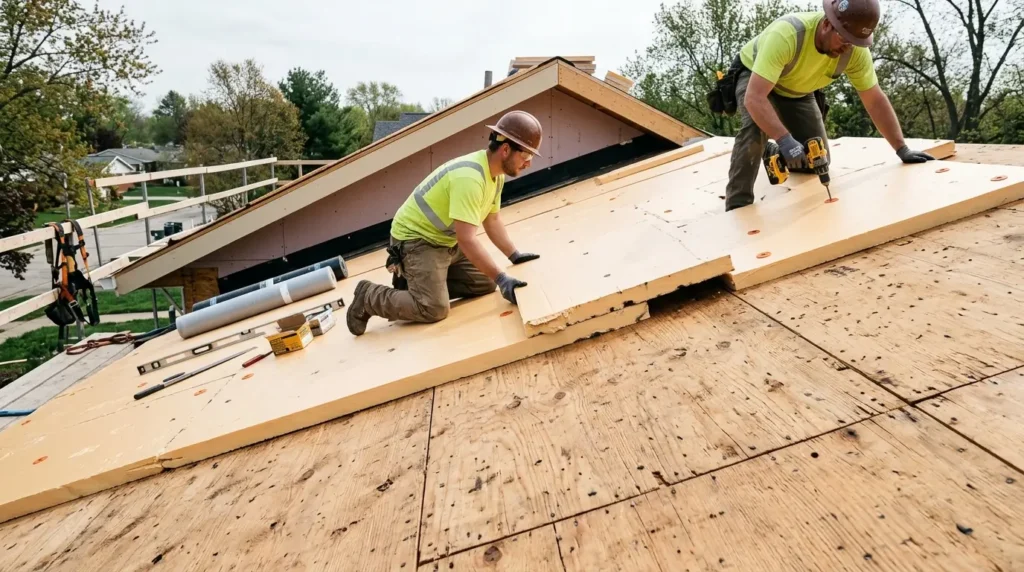
A roof insulation contractor installs insulation above the roof deck, underneath the covering. That placement makes the insulation part of the roof assembly itself. As a result, the work happens during a new roof or a full tear off. At that point the deck sits open, and the crew rebuilds every layer above it anyway.
Attic insulation works differently. An insulation company blows or lays it across the attic floor from inside the house, using separate equipment. We do not offer that service. So if your attic needs new insulation or the old material taken out, an attic insulation company is the better call.
Both approaches reduce heat gain, but they happen at different moments. Therefore the real question is timing. When your roof needs replacing anyway, adding insulation above the deck fits into work that already has to happen. That makes it a practical upgrade rather than a separate project with its own tear off.
Why Orange County homes benefit
Orange County runs warm and dry through most of the year, and the roof takes the full load of it. By mid afternoon, a dark roof surface climbs far above the air temperature. That heat then moves straight down into the structure below, and the rooms under the roof feel it first.
Insulation above the deck interrupts that path before heat reaches the living space. Consequently, upstairs rooms stay closer to the temperature of the rest of the house. Most homeowners notice that change first, well before they look at a utility bill. Inland neighborhoods, where afternoons run hottest, usually see the clearest difference.
The covering adds to the effect. A roof coating and waterproofing system reflects heat at the surface, while insulation slows whatever gets past it. Together, the two do more than either one manages alone. In addition, both can go on during the same roof job, which keeps everything with one crew.
Insulation types we install
The right material depends on your roof assembly, the slope, and how much height the roof edge allows. Before we recommend anything, we check those limits on your roof. After all, a board that does not fit the assembly creates more problems than it solves, especially at the edges and around the vents.
Rigid foam board
Rigid foam gives the most thermal resistance for its thickness. That matters when the roof edge limits how much height you can add. It also goes down in continuous sheets above the deck, so it breaks the heat path that framing creates. For that reason, most above-deck work uses it.
Radiant barrier
A radiant barrier reflects heat instead of resisting it, which suits long stretches of direct sun. However, it needs an air gap behind it to work well. So we build the assembly around that gap, since a barrier pressed flat against the deck loses most of its value.
Layered assemblies
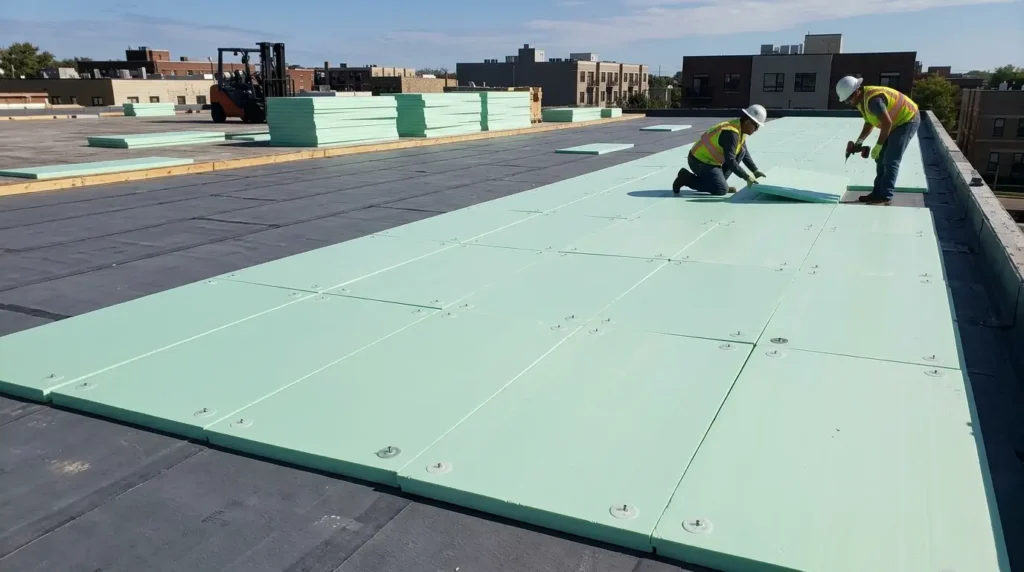
Many roofs use more than one layer. Foam board handles the thermal work, while a barrier covers the radiant side. On low-slope roofs, tapered boards also add drainage to the same assembly. In short, the plan follows your roof rather than a standard package that ignores its slope and edges.
Insulation under shingles
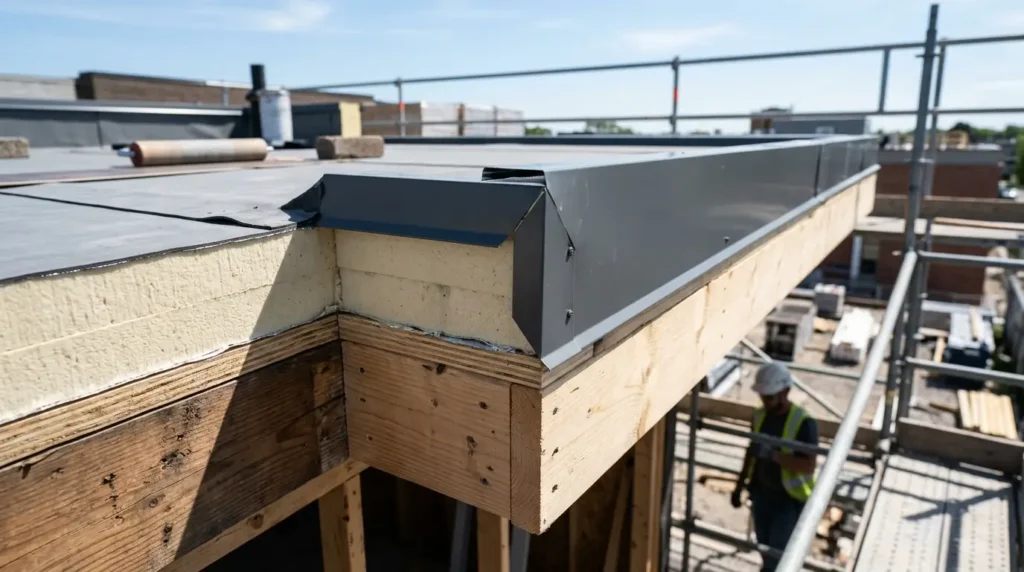
On a shingle roof, insulation goes between the deck and the underlayment, or above the deck under a new nail base. Either way, it adds thickness, so the edge details change. Drip edge, flashing heights, and vent boots all need adjusting to the new height before the shingles go on.
That is why this work belongs with a roof replacement rather than a separate visit. The old roof has to come off either way, and the edges need rebuilding around the new height. We handle both as part of our asphalt shingle roofing work, so one crew manages the whole assembly.
Title 24 requirements
California sets minimum energy requirements for roof assemblies through Title 24. Those rules can change what a replacement has to include. The requirements vary by climate zone, roof slope, and whether the work counts as a repair or a full replacement. So every project starts with that question.
As a roof insulation contractor in Orange County, we build to what your project requires rather than guessing at it. Your plans and your permit set the standard, and the roof assembly follows. Therefore the insulation specification comes out of that process, not out of a catalogue.
Roof insulation replacement
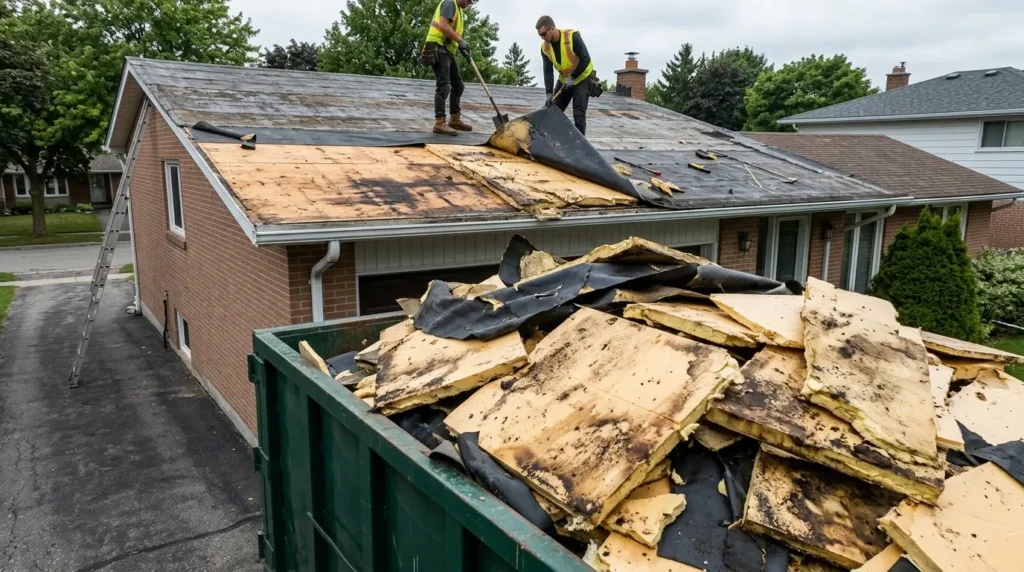
Insulation above the deck lasts as long as it stays dry. A roof leak changes that quickly, since wet board loses its thermal value and holds moisture against the deck. Water is the usual reason homeowners need roof insulation replacement, and the damage often reaches past the spot where the leak shows.
When we open a roof and find damp or crushed board, we remove it along with the old covering. If you suspect a leak above insulated space, a roof inspection can locate it before the damage spreads. Smaller problems may only need roof repair, and we tell you plainly which one your roof needs.
How we handle a roof insulation project
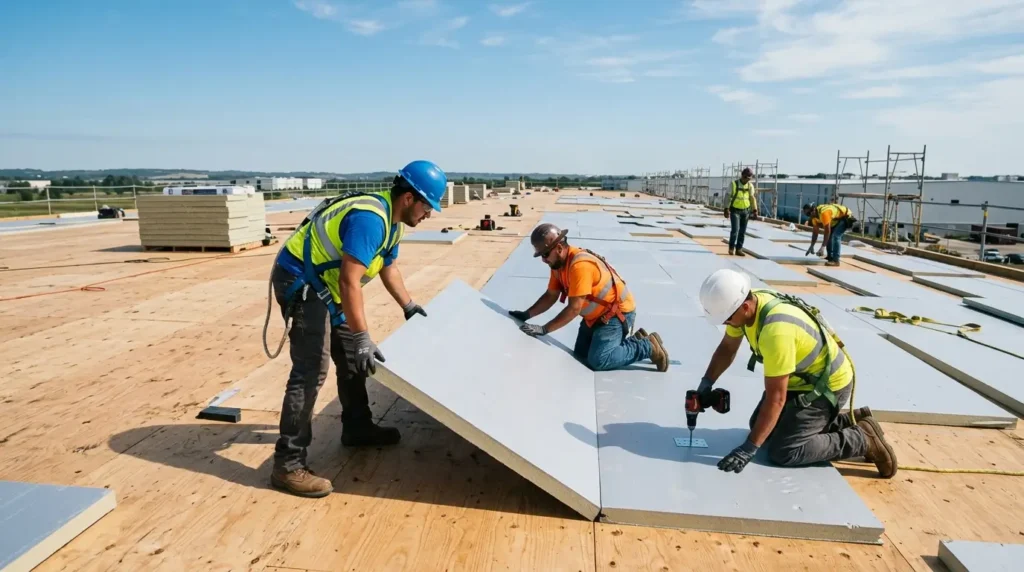
As your roof insulation contractor in Orange County, we start every project with a look at your roof, the deck, and the edge details. Next, we check the plans and permit requirements so the insulation matches what your project needs. After that, we walk you through the material options and how each one affects the roof height.
On the job, the crew removes the old covering and checks the deck for damage. Then we install the insulation, rebuild the edge details, and put the new roof on top. Finally, we clean up the site and review the finished work with you before we leave.
Choosing a roof insulation contractor in Orange County
Not every company that installs insulation works on roofs, and not every roofer adds insulation during a replacement. When choosing a roof insulation contractor in Orange County, ask whether one crew handles both the roof and the insulation. That single point of responsibility matters once the edge details change.
Roof insulation contractor serving Orange County
As a roof insulation contractor serving Orange County, we see the heaviest demand inland, where afternoon temperatures run highest. Coastal homes gain less, though they still benefit on the sun-facing planes. Our crews work in Santa Ana, Anaheim and Placentia, and we cover the rest of the county from the same shop.
Insulation is part of our full residential roofing range, which covers every roof type we install and repair. You can browse our complete roofing services list, or check the service areas page to see where our crews work. Wherever you live in the county, insulation goes in as part of the roof itself.
Frequently Asked Questions
A roofing contractor installs roof insulation, since it goes above the deck during roof work. Attic insulation is a different job that insulation companies handle from inside the house. As a roof insulation contractor in Orange County, we install the roof type only, as part of a new roof.
Yes. Roofers install insulation above the deck whenever the roof comes off, because that layer sits inside the roof assembly. It also affects edge heights, flashing, and vents, which a roofer already manages. However, most roofers do not blow insulation into attics, and we do not offer that service.
Many do, and we install radiant barrier as part of the roof assembly. It works best with an air gap behind it, so we plan that gap into the layers above the deck. Often we pair it with rigid foam, which handles the thermal side while the barrier reflects direct sun.
For many homes, yes, because a replacement is the one time the deck sits fully open. Adding insulation then fits into work that already has to happen. Doing it later would mean removing a new roof. Your plans, your budget, and Title 24 all shape the final decision.
Rigid foam board handles most shingle roofs, sometimes with a radiant barrier layered alongside it. The right choice depends on your assembly, the slope, and how much height the roof edge allows. We work that out before ordering any material, since a board that does not fit causes problems at the edges.
Talk to a roof insulation contractor in Orange County
Call (949) 561-2069 or send us a message. If a roof replacement sits ahead of you, now is the moment to decide about insulation. We walk through the options and the Title 24 requirements before any work starts, so you know exactly what goes into your roof.
Family-owned and operated. Licensed and insured. More than 20 years.