EPDM Roofing Contractor in Orange County
Flat and low-slope roofs on commercial buildings need a membrane that stays watertight through long summers and the occasional winter storm. EPDM, a synthetic rubber membrane, has covered roofs like these for generations. OC Roof Kings works as an EPDM roofing contractor for warehouses, offices, retail centers, and multifamily properties across Orange County.
We install new EPDM roofs, repair aging ones, and replace membranes that have reached the end of their service life. First, our crew inspects the roof and explains what we find in plain language. Then you get a written scope before any work begins, so you know exactly what the job covers.
EPDM Rubber Roofing for Commercial Buildings
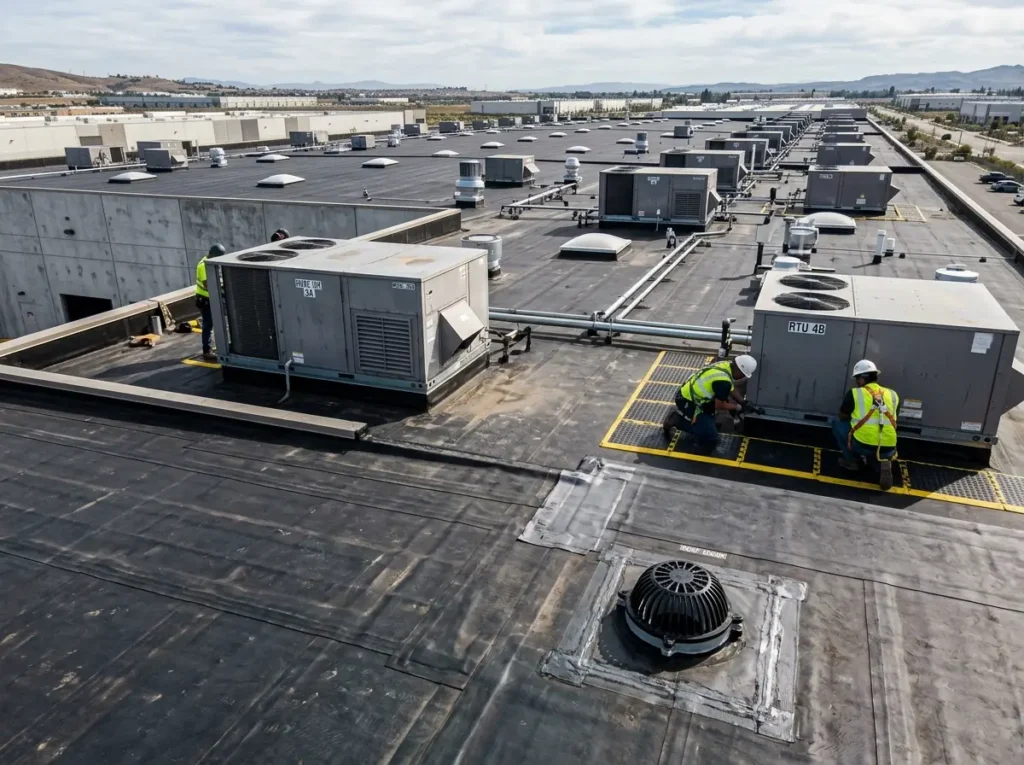
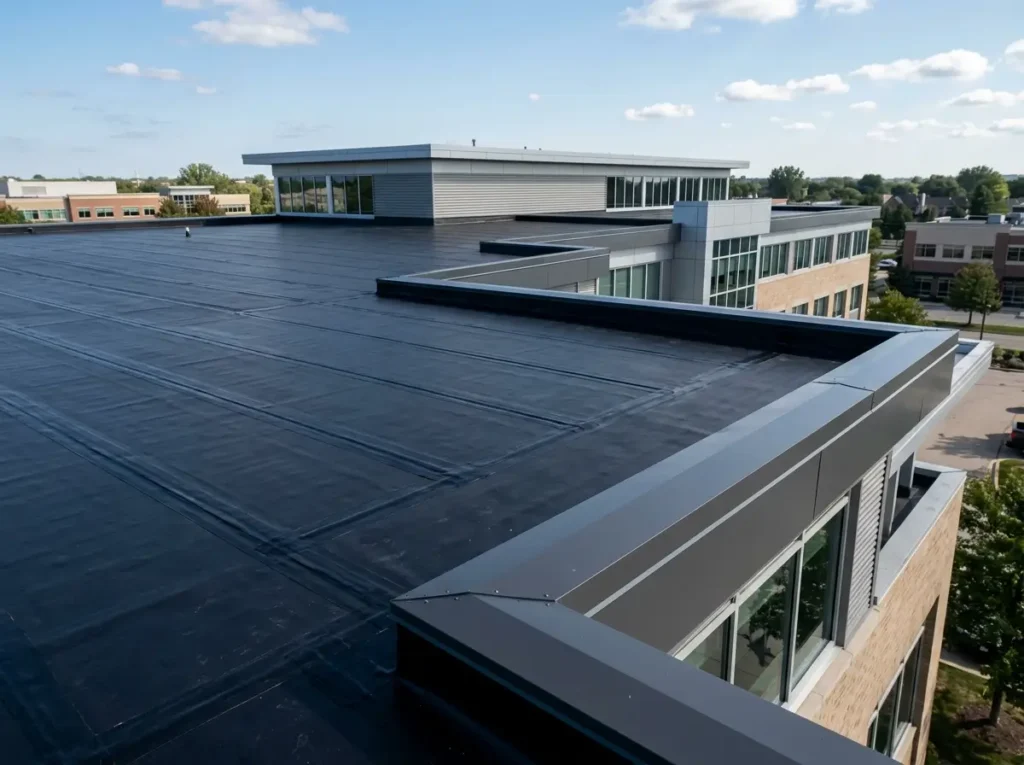
Many owners know EPDM simply as rubber roofing. The membrane arrives in wide rolls, so a large roof goes down with fewer seams than narrower sheets allow. Crews join the sheets with seam tape or adhesive instead of heat. As a result, the finished roof forms one flexible waterproof layer across the entire deck.
EPDM suits many of the buildings we see in Orange County. For example, distribution centers and light industrial spaces carry large, open roof areas. Meanwhile, office buildings and shopping centers have rooftop units and pipe penetrations that need careful flashing. Apartment and HOA properties also have long, low-slope sections over carports and walkways.
Is EPDM the Right Fit for Your Roof?
No single membrane works for every building, so we weigh a few factors before recommending EPDM. Roof shape, drainage, rooftop equipment, and foot traffic all shape the choice. Color matters as well. Standard black EPDM absorbs sunlight, while California’s Title 24 energy code sets cool roof requirements for many low-slope reroofs.
For that reason, we review the energy code requirements for your building early. A good EPDM roofing contractor also tells you when another membrane fits better. In some cases, a reflective white membrane makes more sense, and our TPO Roofing page covers that option. Similarly, roofs with heavy foot traffic may suit Modified Bitumen Roofing.
How We Work as Your EPDM Roofing Contractor
OC Roof Kings runs every EPDM project through five steps, from the first roof walk to the final photos. Each step has a clear purpose, and none of them starts without your approval. That way, your tenants stay informed and your building stays open while our crew works overhead.
Roof Assessment and Written Scope
First, we walk the roof and check the deck, drainage, flashing, and any existing membrane. We also note rooftop units, skylights, and pipes that the new roof must seal around. Afterward, you receive photos and a written scope that spells out the work. Nothing moves forward until you approve that plan.
Deck and Substrate Preparation
A rubber membrane depends on the surface under it. When the scope includes removal, our crew takes the old layers off and cleans the deck down to a solid base. Next, we replace any rotted wood or rusted metal we find. Finally, insulation or cover board goes down wherever the scope calls for it.
Membrane Installation and Seams
Once the base is ready, we roll out the EPDM sheets and let them relax flat before securing them. The crew then attaches the membrane using the method your roof design requires. Next, we clean and prime every overlap and join it with seam tape. We also roll each seam to press out air and set the bond.
EPDM Flashing and Edge Details
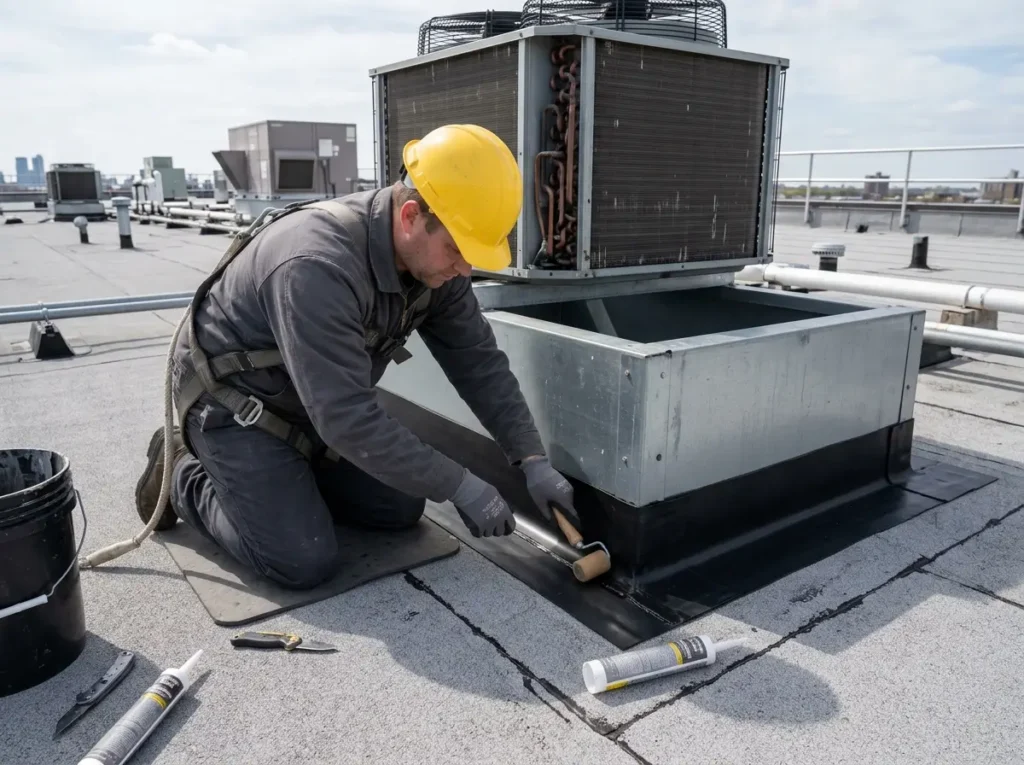
Many leaks start where the roof meets something else. For this reason, we seal every wall, curb, drain, and pipe with EPDM flashing suited to that detail. At the perimeter, we finish the edges with metal edging or termination bar, depending on the building. These details take time, but they decide how well the roof sheds water.
Final Walkthrough and Photos
Before we leave, our crew walks the entire roof and checks every seam, patch, and flashing detail. We also clear debris and leftover material from the roof and the site. Afterward, you receive photos of the finished work along with your written warranty paperwork. Finally, we answer any questions your team has about roof care.
Repairing or Replacing an EPDM Roof
EPDM roofs rarely fail all at once. Instead, small problems build up at seams, flashing, and penetrations over time. An honest EPDM roofing contractor should tell you whether repairs will carry the roof forward or whether replacement makes more sense. Either way, you see the photos and our reasoning before you decide.
EPDM Roof Repair
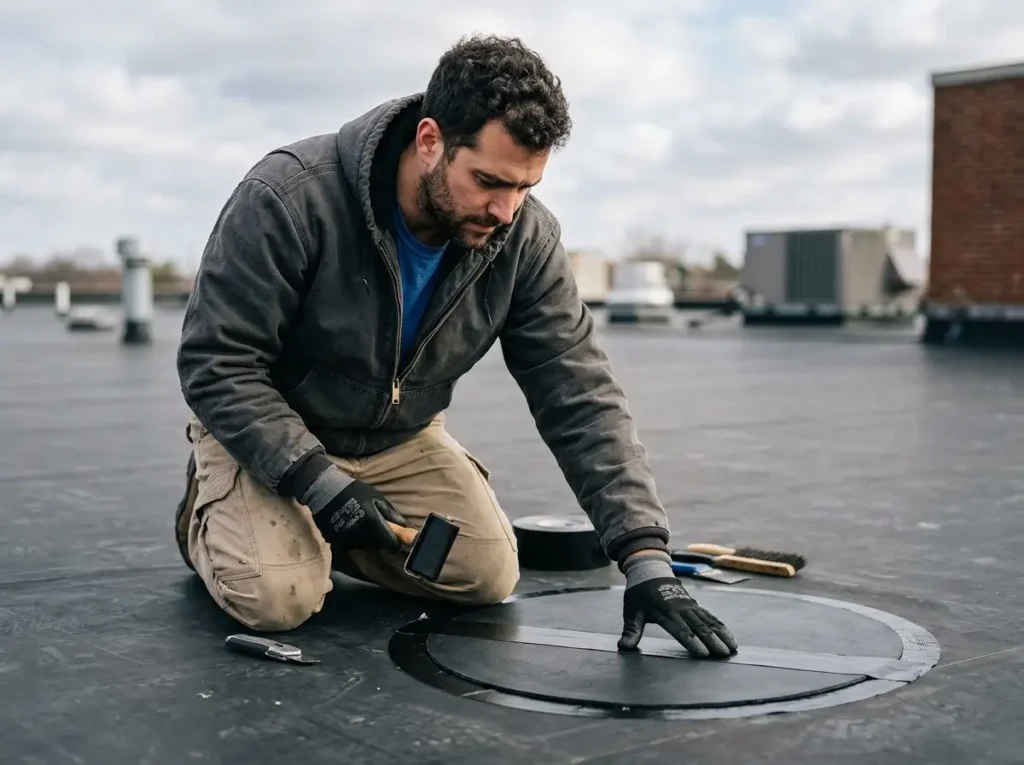
Most EPDM roof repair calls involve loose seams, punctures, and flashing that pulls away as the membrane shrinks with age. Ponding water from blocked drains adds stress too. To fix these problems, we clean and prime the damaged area first. Then we apply EPDM patches and seam tape so the repair bonds to the old membrane.
A store-bought kit can cover a small puncture for a while. However, rubber roof repair on a commercial building also means finding out why the damage happened. For larger failures, our Commercial Flat Roof Repair team handles the full leak search across any membrane type.
EPDM Roof Replacement
Replacement makes sense when seams fail across the roof, the membrane has shrunk badly, or water has soaked the insulation below. In those cases, patching only delays the next leak. Instead, we remove the worn system and install a new roof built for how your building works today. Our Commercial Roof Replacement page explains that process in full.
Keeping an EPDM Roof in Service
Small problems on a rubber roof stay small when someone checks them often. For example, a yearly Commercial Roof Inspection finds lifting seams and punctures before water reaches the deck. In addition, our Commercial Roof Maintenance agreements put drain clearing and flashing checks on a set schedule. For an aging roof, Commercial Roof Coating can add another protective layer.
EPDM Roofing Across Orange County
Choosing a local EPDM roofing contractor matters, because a nearby crew can respond quickly when a seam lets go. We serve retail and light industrial roofs in Huntington Beach. We also work on office and business park buildings in Costa Mesa and Tustin. For the full list of cities on our route, check our Service Areas page.
Why Property Owners Choose OC Roof Kings
Picking the right EPDM roofing contractor comes down to the details. Our crew puts extra care into flashing, drainage, and the written scope before any work starts. Customers across Orange County rate us 5 stars on Google. Our Commercial Roofing page lists every system we work on. Family-owned and operated. Licensed and insured. More than 20 years.
Homeowners with a flat roof over a patio, garage, or addition can visit our Flat Roofing page instead. That page focuses on residential roofs rather than commercial buildings. Still, the same crew, the same written scope, and the same attention to detail go into every roof we take on.
Frequently Asked Questions
EPDM roofing is a synthetic rubber membrane made for flat and low-slope roofs. The name stands for ethylene propylene diene monomer. It comes in large rolls, so a roof needs fewer seams. Commercial buildings use it widely, and many people simply call it a rubber roof.
Standard black EPDM absorbs heat, which can matter under California's cool roof rules. The seams rely on tape or adhesive, and they can loosen as the roof ages. The rubber also punctures under dropped tools or sharp debris. Regular inspections catch most of these issues while repairs stay small.
Yes. A roofing crew can fix most punctures, loose seams, and flashing problems with EPDM patches and seam tape. However, the damaged area needs cleaning and priming first, or the patch will not hold. Widespread seam failure or wet insulation usually calls for replacement instead.
Most EPDM roofing is black, the color many people picture when they think of a rubber roof. White EPDM also exists and reflects more sunlight. Because color affects heat gain and energy code compliance, we review both factors with you before recommending a membrane.
EPDM feels like thick rubber and usually has a dull black surface. Crews join its seams with tape or adhesive, so a darker strip often runs along each overlap. TPO, by contrast, is usually white with heat-welded seams. If you are unsure, our crew can confirm the material during an inspection.
Talk to an EPDM Roofing Contractor
Need a new rubber roof or dealing with a leaking EPDM membrane? Call OC Roof Kings at (949) 561-2069 or contact us online to schedule a roof assessment. You get an EPDM roofing contractor who checks the roof, explains each option, and puts the plan in writing. California Contractor License #600662.