Built-Up Roofing Contractor in Orange County
Walk onto the roof of an older warehouse or office building in Orange County, and you may find gravel underfoot. That surface usually sits on top of a built-up roof, one of the oldest flat roof systems still in service. OC Roof Kings works as a built-up roofing contractor for commercial, industrial, and multifamily properties.
We repair aging built-up roofs, replace worn systems, and install new layered roofs where the building calls for one. Before anything else, our crew inspects the roof and photographs what we find. Afterward, you receive a written scope, so every layer and every task is clear before work begins.
Commercial Built-Up Roofing Explained
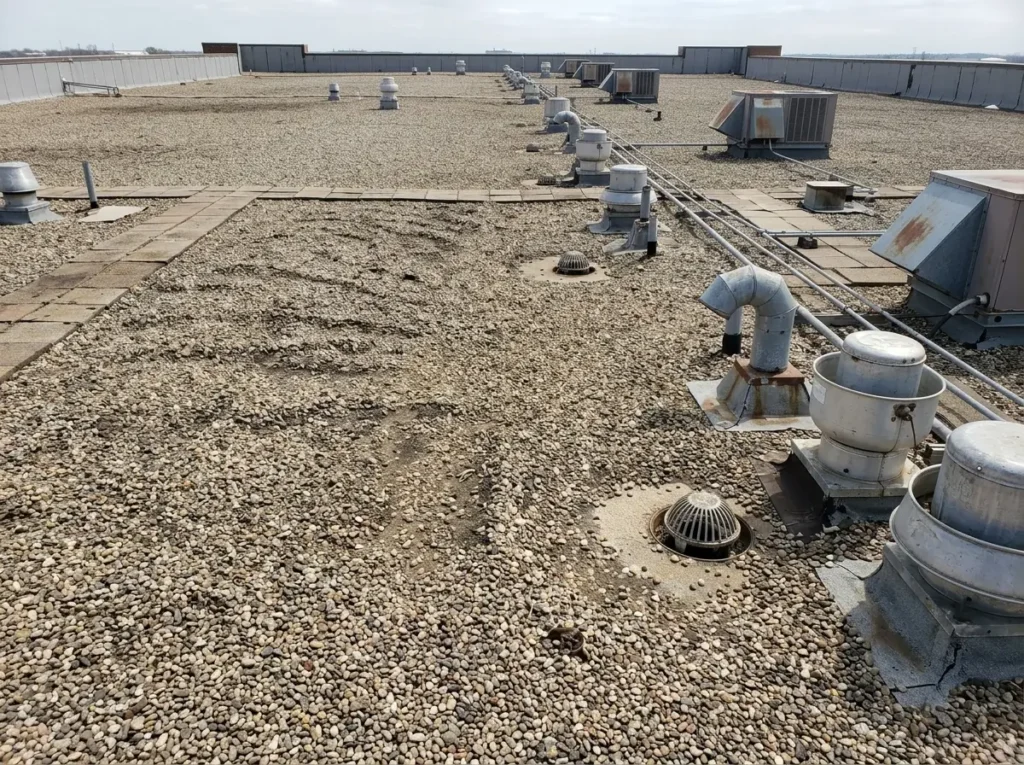
A built-up roof, often called BUR, forms on site from several layers. Crews alternate reinforced felt sheets, called plies, with coats of bitumen. Each ply adds another barrier between the weather and the building. As a result, a well-built BUR roofing system can take heavy wear without losing its seal.
The top layer protects everything below it. Some roofs finish with gravel pressed into a final flood coat of bitumen. Others use a mineral cap sheet or a reflective coating instead. For that reason, commercial built-up roofing shows up on many warehouses, schools, and older office buildings across the county.
Tar and Gravel Roofs
Most property owners know this system by another name: the tar and gravel roof. The gravel layer shields the bitumen from direct sunlight and spreads out foot traffic. It also gives crews firmer footing on the roof. Because the system has been around for generations, many Orange County buildings still carry one today.
A gravel roof does have its drawbacks. The stones add weight, and they hide cracks and blisters from view. Water can also sit under the gravel near clogged drains. Still, a tar roof in good shape often has service left. An honest built-up roofing contractor looks closely before recommending anything major.
Is Built-Up Roofing the Right Fit?
Built-up roofing earns its place on roofs with heavy equipment, frequent service visits, or strict demands for layered protection. However, the multi-ply design adds weight, and installation takes longer than a single-ply system. The building structure, the drainage, and your schedule all shape the right answer.
A good built-up roofing contractor also tells you when a newer system fits better. For example, Modified Bitumen Roofing offers similar layered protection with fewer plies. Meanwhile, TPO Roofing covers large roofs with reflective sheets. Similarly, EPDM Roofing suits simpler roofs that need a flexible membrane.
How We Work as Your Built-Up Roofing Contractor
OC Roof Kings handles every built-up roofing project in four phases. Each phase ends with a check-in, so your team always knows what comes next. Along the way, we schedule noisy work around tenants and business hours. We also keep the rest of your property clean and open.
Evaluation and Written Scope
First, we inspect the roof surface, the drains, the flashing, and the edges. On an existing built-up roof, we may cut a small core sample to count the layers and check for trapped moisture. Then we write up the findings with photos. No work starts until you approve the scope.
Removal and Deck Repair
When a full tear-off makes sense, our crew removes the gravel and old plies in manageable sections. That way, the building never sits exposed to the weather overnight. Next, we inspect the bare deck and replace any rotted wood or rusted metal. Insulation or cover board then goes down where the scope requires it.
Building the Plies
With the deck ready, the crew lays the first ply and bonds it to the surface. After that, each new ply overlaps the last, with bitumen between every layer. We follow the ply count and application method in your written scope. Throughout the job, our crew checks each layer before the next one goes down.
Surfacing, Flashing, and Final Check
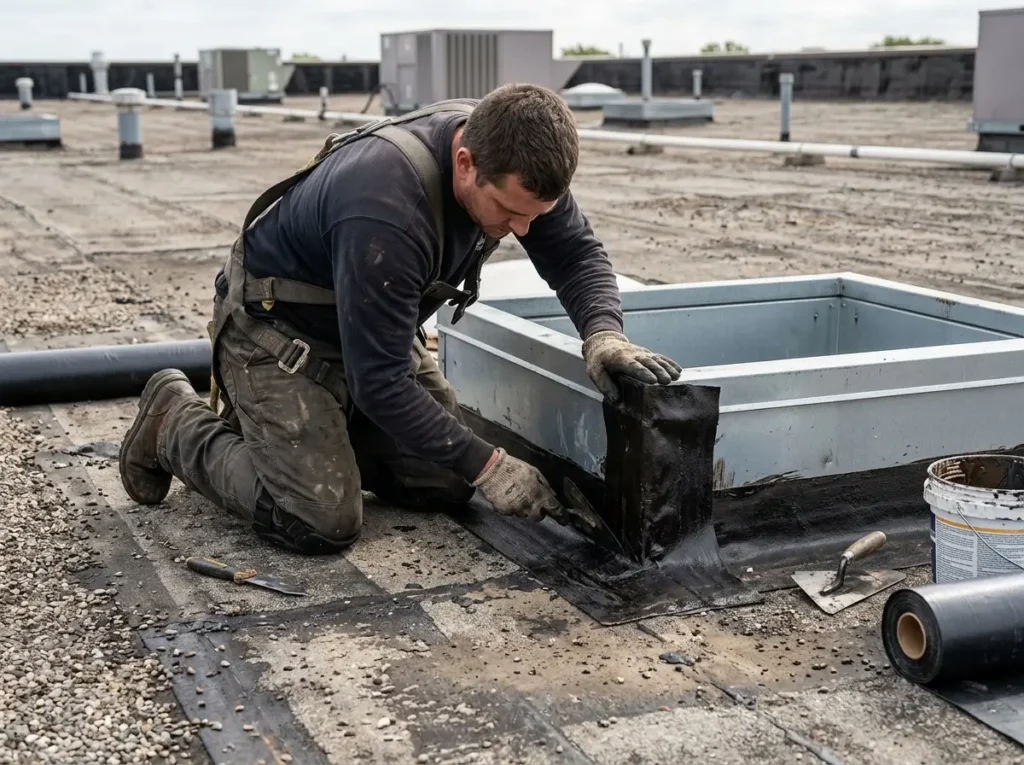
Next comes the top surface, whether that means gravel, a cap sheet, or a coating. We also flash every wall, curb, drain, and pipe, since leaks often begin at these edges. Finally, we walk the entire roof, clean the site, and hand over photos and your written warranty paperwork.
Built-Up Roof Repair and Replacement
Many built-up roofs in Orange County still have useful years left, even when they leak. The real question is whether targeted repairs will hold or whether the layers have worn through. Our crew checks the roof up close and walks you through the options. Either way, you see photos and our reasoning first.
Tar and Gravel Roof Repair
Most built-up roof repair calls involve splits, blisters, bare spots where the gravel has scattered, or flashing that has pulled loose. To fix these, we clear the gravel from the damaged area and let it dry. Then we build new plies over the damage and restore the bitumen and gravel on top.
Gravel roof repair also means finding the cause, such as ponding water, foot traffic, or failing edge metal. A quick patch without that step rarely lasts. For leaks that need a full search across the roof, our Commercial Flat Roof Repair team tracks the water to its source.
Replacing an Aging Built-Up Roof
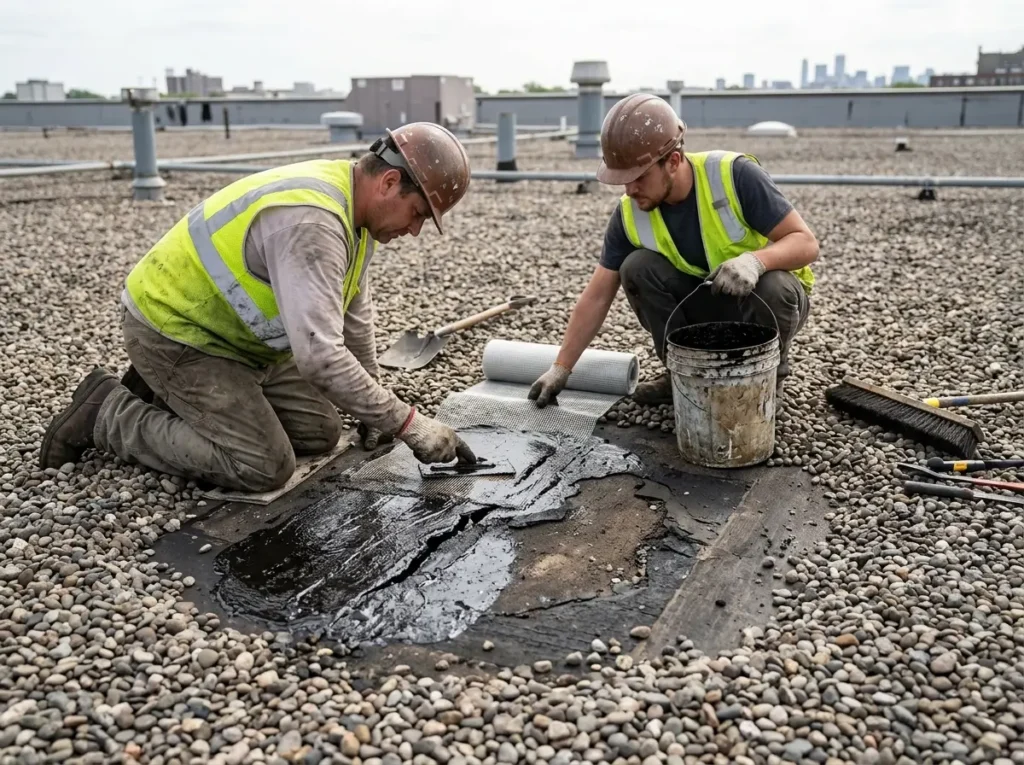
Replacement makes more sense when leaks appear across much of the roof or moisture has soaked the insulation. At that stage, repairs turn into chasing one leak after another. Instead, we remove the old layers and install a new system suited to your building. Our Commercial Roof Replacement page explains the full process.
Caring for a Built-Up Roof
Scattered gravel, clogged drains, and small blisters all start out easy to fix. For that reason, a yearly Commercial Roof Inspection catches them before water reaches the deck. Our Commercial Roof Maintenance agreements also keep drains clear and gravel spread evenly. On a roof with a smooth surface, Commercial Roof Coating can add another protective layer.
Built-Up Roofing Across Orange County
Choosing a local built-up roofing contractor means faster help when a storm opens a split. Our crews work on warehouses and office buildings in Santa Ana. We also handle commercial and apartment roofs in Garden Grove and Buena Park. To see the full list of cities, visit our Service Areas page.
Why Property Owners Choose OC Roof Kings
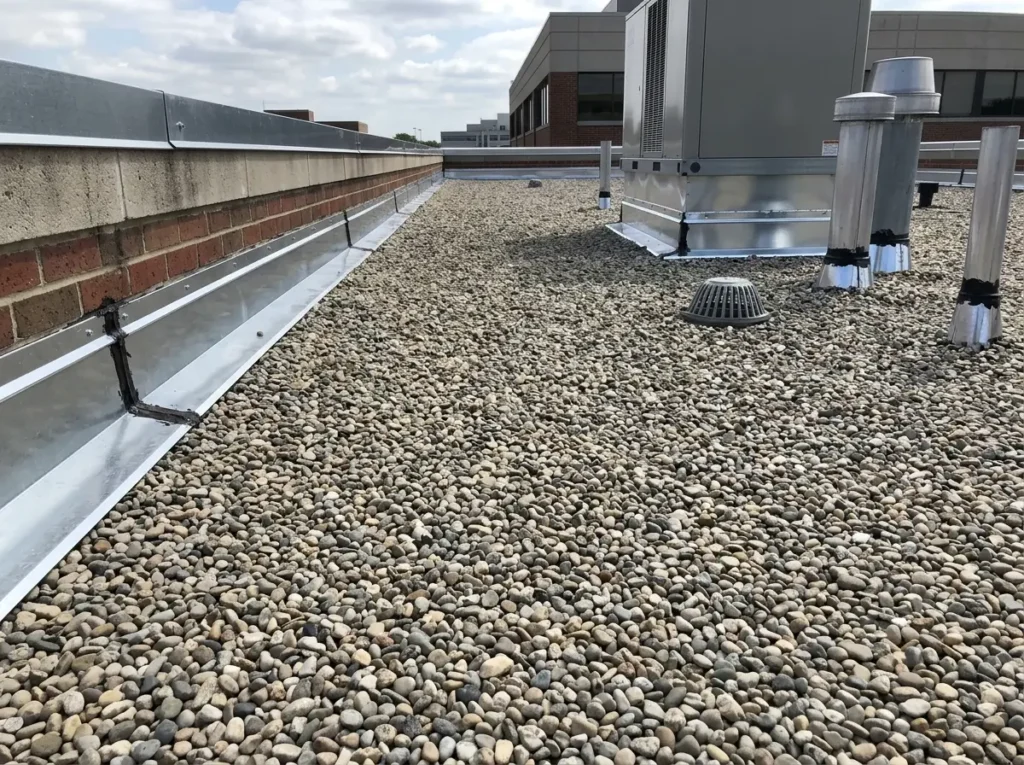
Owners of older buildings need a built-up roofing contractor who understands how these roofs age. Our crew knows where layered roofs tend to fail and how to fix them without cutting corners. Our customers across Orange County rate us 5 stars on Google. Visit our Commercial Roofing page for every system we offer. Family-owned and operated. Licensed and insured. More than 20 years.
Some older homes in the county also have tar and gravel over a flat section or patio. If that describes your house, our Flat Roofing page focuses on residential roofs. Whichever page fits, the same crew and the same written scope come with every job we take on.
Frequently Asked Questions
Built-up roofing means a flat roof made from several layers stacked on site. Crews alternate sheets of reinforced felt with coats of bitumen, then finish the top with gravel, a cap sheet, or a coating. The name comes from the way the roof builds up layer by layer.
A built-up roof has three main parts. The plies are reinforcing sheets, usually fiberglass or organic felt. Bitumen, either asphalt or coal tar, bonds the plies together. Finally, a top surface of gravel, a mineral cap sheet, or a coating protects the layers below from sun and wear.
Most people call it a tar and gravel roof, especially when stones cover the top layer. Roofers also shorten built-up roofing to BUR. Older property records sometimes list it as a hot mop or tar roof. All of these names describe the same layered system.
Yes, in most cases. A tar and gravel roof is a built-up roof with gravel pressed into the top coat of bitumen. However, not every built-up roof uses gravel. Some finish with a mineral cap sheet or a reflective coating instead.
Yes. A crew clears the gravel from splits, blisters, or flashing leaks and dries the area. Then new plies go over the damage. After that, fresh bitumen and gravel go back on top. When leaks show up across much of the roof, replacement usually makes more sense than repeated patching.
Talk to a Built-Up Roofing Contractor
Dealing with leaks on an old tar and gravel roof or planning a new one? Call OC Roof Kings at (949) 561-2069 or reach out online to book a roof assessment. You get a built-up roofing contractor who inspects the roof, explains each option, and puts the plan in writing. California Contractor License #600662.