TPO Roofing Contractor in Orange County
OC Roof Kings is a TPO roofing contractor serving distribution centers, office buildings, shopping plazas, and multifamily properties in every part of Orange County. We install new TPO roofs, weld repairs into existing membranes, and replace systems that have reached the end of the road. Our own crew handles every step. Call (949) 561-2069 to schedule a roof assessment.
What Is TPO Roofing?
TPO stands for thermoplastic polyolefin, a single-ply membrane built for low-slope commercial roofs. It comes in wide rolls, usually with a bright white surface. Crews join the sheets through hot-air welding. The heat fuses the edges into one continuous layer. As a result, the seams become part of the membrane rather than a glued joint.
That welded design is the main reason TPO roofing has grown so common on commercial buildings. The white surface also reflects a large share of the sun’s heat instead of absorbing it. On a large warehouse or shopping center roof, that difference shows up in cooler interior spaces during long Orange County summers.
Why Building Owners Choose TPO
Property owners pick TPO for a few practical reasons. First, the reflective surface helps many reroofing projects satisfy the cool roof requirements in California’s Title 24 energy code. Second, welded seams hold up well against ponding water. Third, the membrane stays flexible, so it handles the daily expansion and contraction that comes with hot days and cool nights.
TPO also works well around rooftop equipment. Because the material welds to itself, crews can build clean, watertight flashings around curbs, vents, and pipes. However, TPO is not the right answer for every roof. Buildings with heavy foot traffic or unusual details may do better with EPDM Roofing or Modified Bitumen Roofing. We explain those options too.
TPO Roofing Installation
How a TPO roof is installed matters as much as the membrane itself. Our crew works in three stages, from the deck up to the final flashing. Each stage affects how well the roof handles sun, wind, and water over time. Below is what happens at every stage.
Preparing the Deck
Every installation starts below the surface. On a tear-off job, the crew strips the existing roofing and exposes the deck. From there, we look for corrosion, decay, and weak areas. We fix every weak area before any new material goes on. After all, a TPO membrane can only be as strong as the base it sits on.
Shrinking Membranes and Open Laps
As some membranes age, they shrink and pull at the edges, corners, and penetrations. At the same time, the laps where two sheets overlap can loosen and open. Both problems create gaps that rain easily finds. We secure the pulled areas and seal every open lap along the affected run.
Insulation and Attachment
Next, the crew installs insulation boards to create a flat, solid surface. TPO then attaches in one of two common ways. Mechanically attached systems use fasteners and plates along the seams, while fully adhered systems bond the membrane to the surface below. The right method depends on the deck, the building, and local wind exposure.
Welding Seams and Flashing
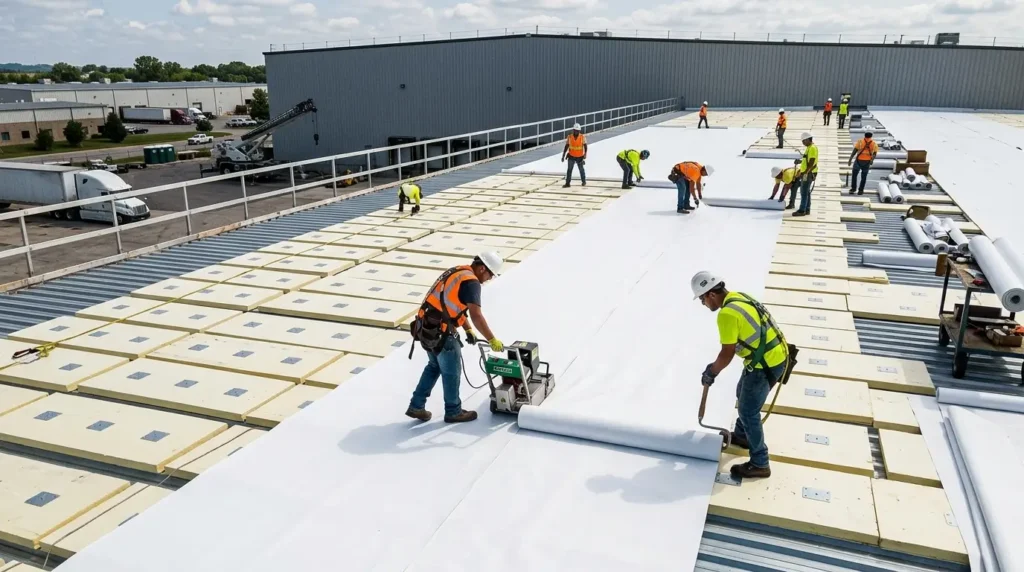
With the membrane in place, the crew welds every seam with hot air and probes each one to check for gaps. After that, we flash walls, edges, curbs, drains, and every penetration with matching TPO. These details matter most, since most leaks on any flat roof start at edges and openings rather than open field areas
TPO Roof Repair
TPO roofs usually fail in predictable places. Seams can separate where a weld was weak, and punctures happen where people drop tools or step on sharp debris. Flashings around curbs and walls also pull loose over time. Because TPO welds to itself, most repairs involve cleaning the area and welding a new patch over the damage.
The key is proper preparation. An experienced TPO roofing contractor cleans and preps aged membrane before welding a patch, so the patch bonds. Quick tape fixes often skip that step and fail. For damage across a large area, our Commercial Flat Roof Repair team assesses the whole surface. If the roof is past saving, Commercial Roof Replacement becomes the next conversation.
Keeping a TPO Roof in Good Shape
A TPO roof lasts longest with simple, regular care. Keep drains clear so water leaves the surface, and keep foot traffic on marked routes near equipment. In addition, an annual commercial roof inspection spots loose flashing and small punctures early. For hands-off care, our Commercial Roof Maintenance agreements cover these tasks on a regular calendar.
Over time, the white surface can collect dirt that reduces its reflectivity. Gentle cleaning helps restore it. When an older membrane is still sound but weathered, a compatible commercial roof coating can add a fresh reflective layer. We check compatibility before recommending any coating on TPO.
TPO on Homes
TPO is not only for commercial buildings. Many Orange County homes have flat sections over garages, additions, or modern living spaces, and TPO works well there too. Its white surface helps keep the rooms below cooler. For homeowners, our Flat Roofing page covers residential flat roof options, including TPO, in more detail.
TPO Roofing Across Orange County
Building owners hire us as their TPO roofing contractor all over the county. Our TPO work includes corporate buildings in Irvine and light industrial space in Rancho Santa Margarita. We also handle warehouse roofs in San Clemente. Our Service Areas page shows every city on our schedule.
Why Choose OC Roof Kings for TPO
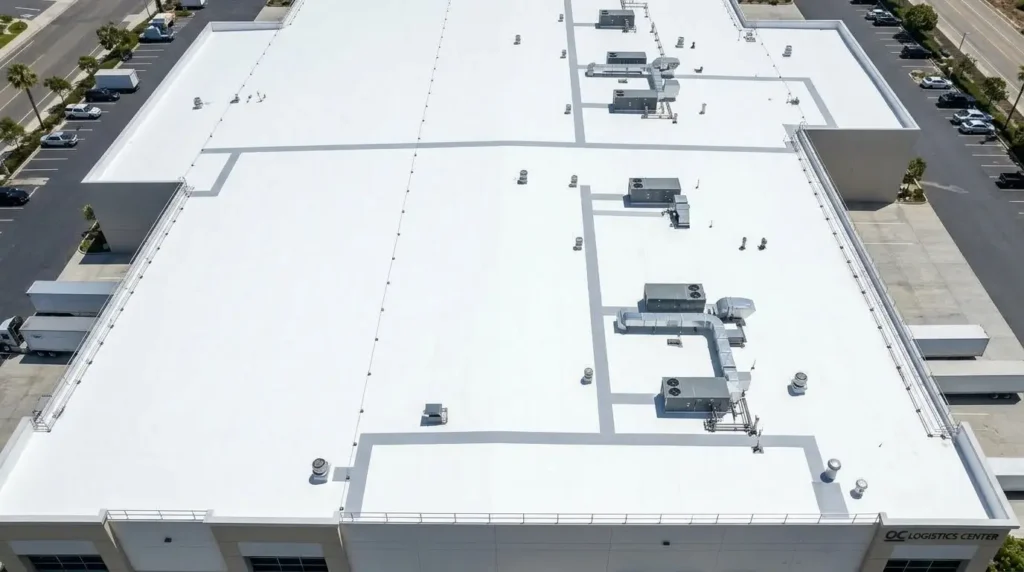
Choosing a TPO roofing contractor comes down to the quality of the welds and the flashing details. Our crew takes the time to probe every seam and finish every edge properly. Every system we work on appears on our Commercial Roofing page. Building owners across Orange County rate us 5 stars on Google. Family-owned and operated. Licensed and insured. More than 20 years.
Frequently Asked Questions
TPO roofing is a single-ply membrane made from thermoplastic polyolefin, designed for roofs with little or no pitch. It usually has a white, reflective surface. Crews weld the seams together with hot air, which creates one continuous waterproof layer. Because of its reflectivity, TPO is a common choice for commercial buildings in warm climates.
The most common problems are seam separation, punctures, and loose flashing around walls, curbs, and pipes. Poor installation causes many of these, especially weak welds. Ponding water from blocked drains can also stress the membrane. Regular inspections catch most of these issues while they are still small and simple to fix.
Yes. A TPO roofing contractor can patch most damage by welding a new piece of TPO over the area. However, the crew must clean and prepare the old membrane first, or the patch will not bond. Large areas of damage or many failing seams may call for a bigger repair or a replacement instead.
Standard paint is not a good choice for TPO, since it will not bond well and can peel. Instead, roofers use coatings made to work with TPO membranes. Before any coating goes on, the surface needs cleaning and a compatibility check. A coating works best on a TPO roof that is still sound.
Yes, TPO can handle occasional foot traffic for maintenance and inspections. Still, repeated walking in the same area wears the membrane, and dropped tools can puncture it. For that reason, many buildings add walkway pads along routes to rooftop equipment. Avoid walking on a wet TPO roof, since the surface gets slippery.
Talk to a TPO Roofing Contractor
Planning a new roof or dealing with a failing TPO membrane? Call OC Roof Kings at (949) 561-2069 or reach out online to book a roof assessment. Our crew assesses the roof, reviews the choices with you, and delivers a written plan. Buildings of every size across the county are within our reach.