
Roof Pitch Multiplier: Understanding Roof Pitch and Roof Size | OC Roof Kings
Introduction:
Definition of Roof Pitch Multiplier:
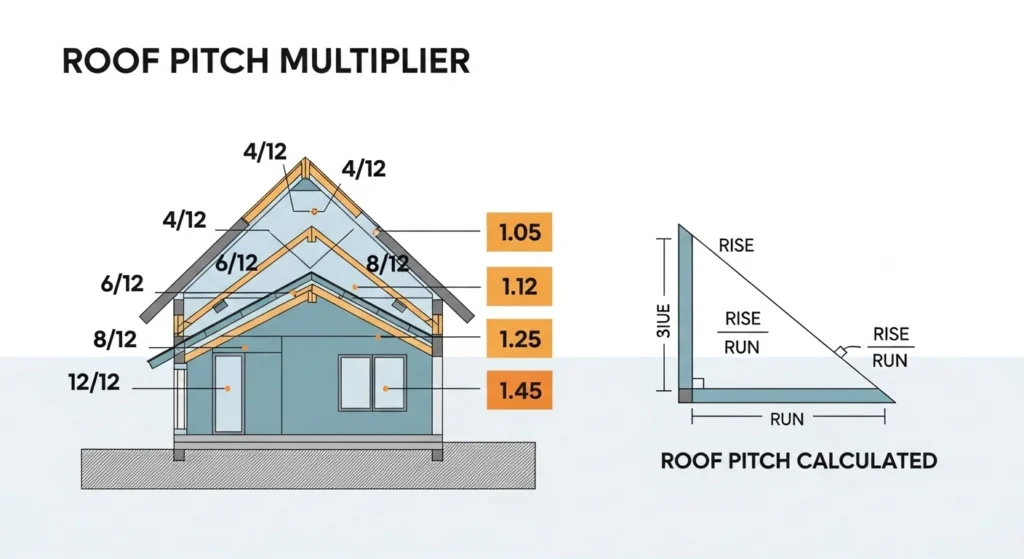
Define what a roof pitch multiplier is and explain its significance in roofing projects. The roof pitch multiplier adjusts for the total roof surface area based on the slope or pitch. It is an essential factor in determining the total area for material estimates, labor, and cost calculations.
For a roofing company like OC Roof Kings, understanding and accurately applying the roof pitch multiplier is crucial for creating precise estimates, delivering competitive pricing, and ensuring that no additional costs are overlooked.
Practical Application: Homeowners, property developers, and roofing contractors need this value to properly estimate roofing projects and select appropriate materials.
Include recent statistics: For example, according to a 2023 survey from Roofing Contractor Magazine, accurate roof pitch calculation can reduce material wastage by up to 15%, improving project efficiency and reducing costs.
Understanding Roof Pitch
Explanation of Roof Pitch:
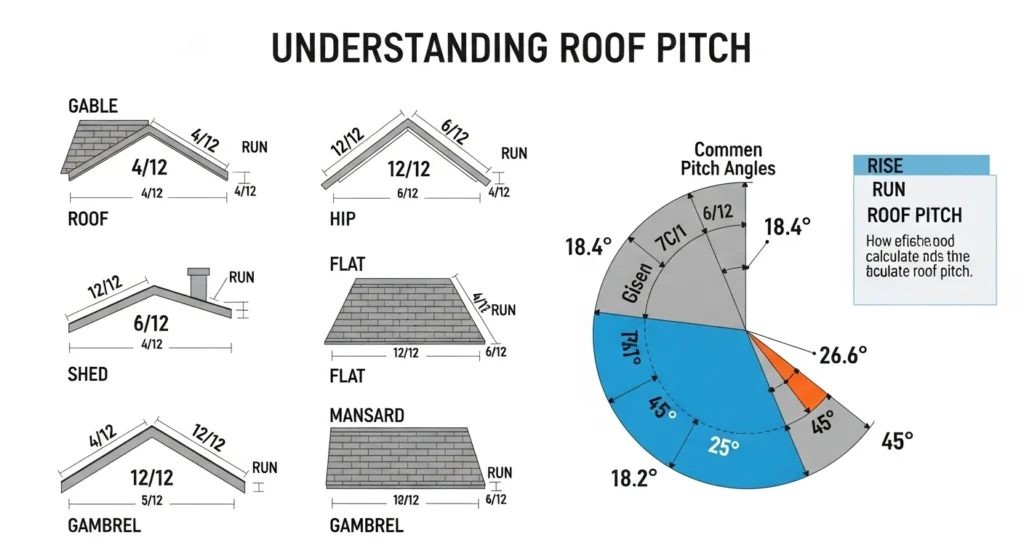
Roof pitch refers to the steepness or angle of the roof, usually expressed as a ratio of the vertical rise to the horizontal run. A 4/12 pitch, for example, means the roof rises 4 inches vertically for every 12 inches of horizontal distance. This is crucial for determining roof design, load-bearing capacity, and overall roofing efficiency.
Pitch of a Roof
How Roof Pitch is Measured:
Detail how pitch is measured (e.g., rise over run), and explain why the 12-inch horizontal run is a standard measurement. Illustrate with real-world examples.
Statistical Update: Include industry data from the National Roofing Contractors Association (NRCA) showing that properly calculating the roof pitch leads to up to 20% savings on roofing material costs in residential projects.
Pitch Angle
Impact on Roof Size and Surface Area:
Explain how the pitch angle influences the roof’s surface area, which directly affects the quantity of materials needed for roofing. For example, a higher pitch results in a larger surface area and more roofing material.
Calculating Roof Pitch Multiplier
Methods to Calculate Roof Pitch Multiplier:
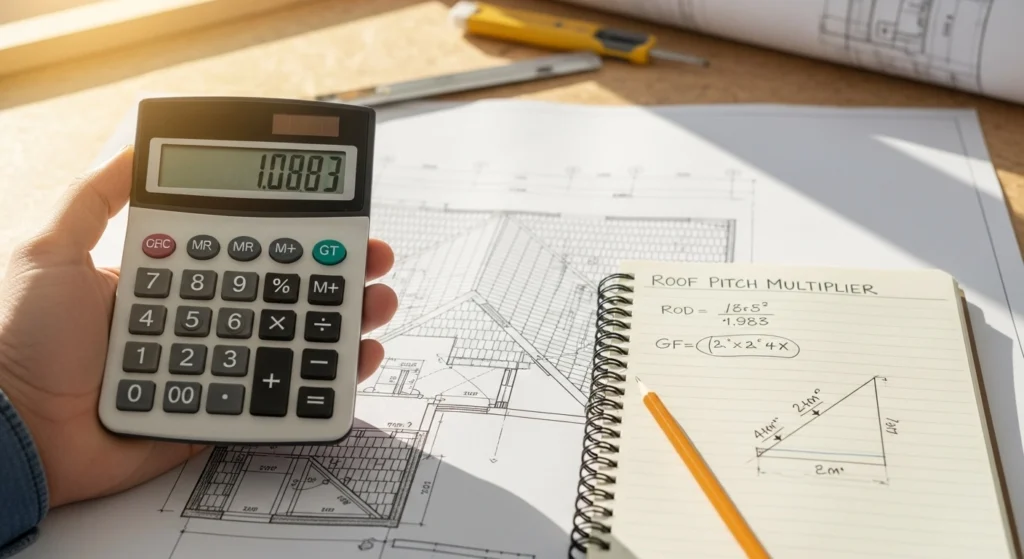
The Roof Pitch Multiplier Formula
The roof pitch creates a right-angled triangle with the roof’s structure, where:
Hypotenuse = The sloped length of the rafter.
Rise = The vertical change in height.
Run = The horizontal distance (standardized to 12 inches).
Practical Application: This method is vital for contractors to provide accurate material cost and labor estimates.
| Roof Pitch (Rise/Run) | Multiplier (Pitch Factor) |
| 4/12 | 1.054 |
| 6/12 | 1.118 |
| 8/12 | 1.202 |
| 10/12 | 1.302 |
| 12/12 (45° angle) | 1.414 |
Using a Roof Pitch Calculator
Provide online tools, calculators, and apps that contractors and homeowners can use to simplify the calculation process.
Highlight the benefits of these tools in providing quick and accurate estimates, saving time and reducing human error in calculations.
Latest Data: Mention that online calculators have become 30% more accurate over the past five years due to improvements in user interface and integration with local building codes and weather patterns.
Factors Influencing Roof Pitch
Roof Pitch and Roofing Materials:
Discuss how different pitches impact the selection of roofing materials, such as shingles, tiles, and metal roofing. A steeper pitch may be more suitable for certain materials, while a low-pitched roof may require more specialized materials.
Recent Data: According to a study by the Metal Roofing Alliance (2023), 65% of homeowners with steeper roofs choose metal roofing due to its durability and water drainage properties.
Steeper Roofs
Characteristics and Benefits:
Explain the characteristics of steep-pitched roofs, including better water runoff, resistance to snow and ice accumulation, and enhanced attic ventilation.
Case Study: A 2022 report from the American Institute of Architects (AIA) found that high-pitched roofs reduce long-term maintenance costs by 20% in areas prone to heavy snowfall.
Lower-Pitched Roofs
Considerations for Flat and Low-Pitched Roofs:
Discuss the challenges of flat and low-pitched roofs, such as water pooling, drainage issues, and the need for more frequent maintenance.
Statistics: A 2023 study by Roofing Insights showed that 40% of roof failures in low-pitched designs are due to inadequate drainage systems.
Impact on Roofing Costs
Roof Pitch Multiplier and Costs:
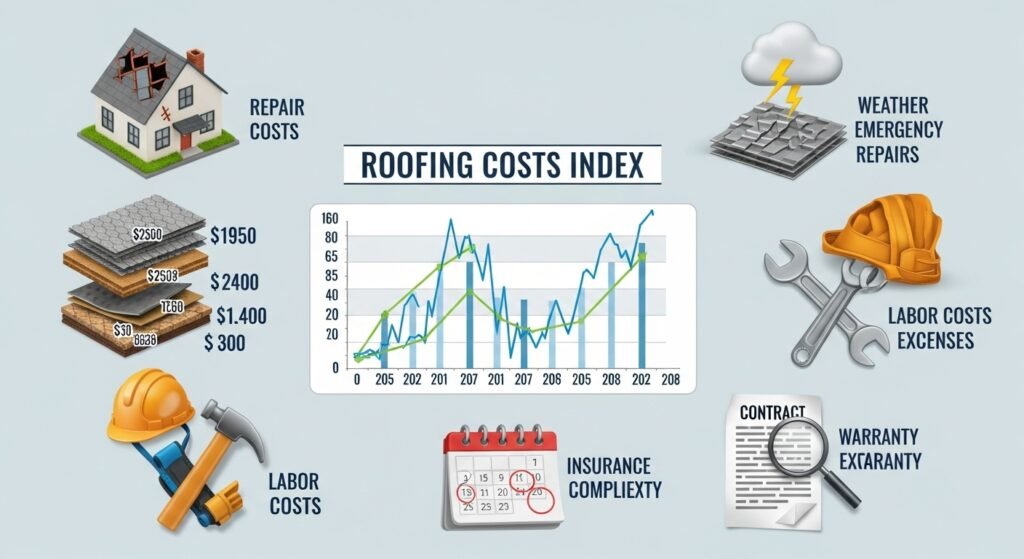
Explain how the roof pitch multiplier directly affects the overall cost of the roofing project. A higher pitch increases the roof’s surface area, which in turn increases material and labor costs.
Data: According to a 2023 Roofing Market Report, roofs with pitches above 7/12 can increase material costs by 15% to 20% due to increased surface area.
Roofing Materials and Costs
Roofing Material Cost Comparison by Pitch (2023 Estimates)
The pricing below represents installed cost ranges and is based on national averages, where 1 Square = 100 square feet of roof area. The higher end of each range generally accounts for steeper pitches, increased labor/safety costs, and premium product lines.
| Material Type | Low/Moderate Pitch (4:12 to 7:12) | Steep Pitch (8:12 and up) | Key Pitch Impact |
| Asphalt Shingles | $400 to $650 per square ($4.00 – $6.50/sq. ft.) | $600 to $850+ per square ($6.00 – $8.50+/sq. ft.) | Low Impact. Labor cost increases due to safety measures and slower pace, but material is easy to handle. |
| Metal Roofing (Standing Seam) | $1,000 to $1,400 per square ($10.00 – $14.00/sq. ft.) | $1,200 to $1,800+ per square ($12.00 – \$18.00+/sq. ft.) | Moderate Impact. Steeper pitches require more specialized lifting equipment and significantly slower, safer work for handling large panels. |
| Clay/Concrete Tiles | $1,200 to $2,200 per square ($12.00 – $22.00/sq. ft.) | $1,800 to $3,000+ per square ($18.00 – $30.00+/sq. ft.) | High Impact. Fragile, heavy materials are difficult to transport, stage, and install on steep slopes, leading to high labor and potential breakage costs. |
| Slate (Natural) | $2,000 to $3,500 per square ($20.00 – $35.00/sq. ft.) | $2,800 to $4,500+ per square ($28.00 – $45.00+/sq. ft.) | Highest Impact. Installation is complex, requires highly specialized labor, and the high weight of the material necessitates maximum safety precautions on steep roofs. |
Homeowner Considerations
Measuring Roof Pitch:
Provide clear instructions for homeowners on how to measure their roof pitch. Offer tips for assessing whether a professional should be consulted.
Recommendation: Homeowners should measure pitch during roof inspections to better understand their roof’s suitability for various materials
Working with Roofing Professionals
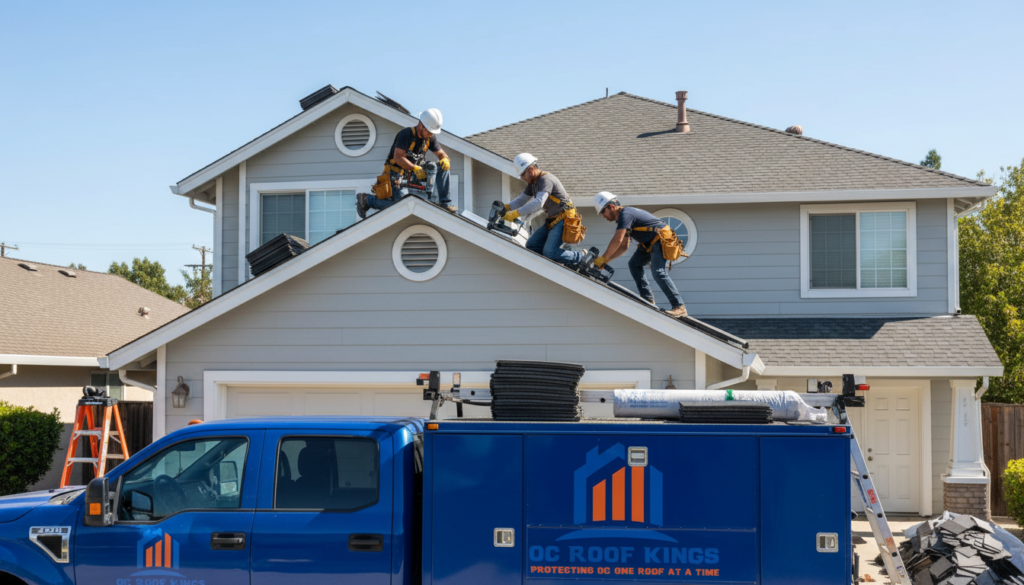
Working with experienced roofing professionals ensures accurate pitch measurement, proper material selection, and code compliance. They help maximize efficiency and durability, guiding you through roof pitch, material options, and seamless installation for lasting results.
Tip: Consider recommending using licensed contractors from trusted platforms like the National Roofing Contractors Association (NRCA) to ensure you receive expert services and peace of mind.
If you’re looking for reliable, experienced, and certified roofing professionals in Southern California, OC Roof Kings offers exceptional roofing solutions. With over 17 years in the business, their team of experts ensures accurate measurements, quality materials, and compliance with local building codes. For a consultation, call 949-561-2069 today!
Sources
- Study on slope and cost variation: “Effect of the Roof Slope on the Cost Variation of Residential Houses” demonstrates quantitative cost impact of slope increases. ResearchGate
- Surface‑area correction for pitch: Procore Technologies’ roof sheathing calculator shows multipliers (e.g., 6:12 → 1.12) for converting footprint to actual surface area. Procore
- Energy / ventilation impact of roof pitch: A modeling study from MDPI shows how attic cooling load decreases by about 9% as pitch increases from 3/12 to 8/12. MDPI
- Industry cost & complexity statistics: Roofing market overview from Ruby Home lists major cost drivers (size, complexity, materials) which tie into pitch multiplier implications. rubyhome.com
- Cost modelling for materials: “Cost Modelling for Roofing Material Selection” gives modelling principles that you can reference in the “Roofing Materials” section. SciSpace
Conclusion
Understanding and calculating the roof pitch multiplier is crucial for homeowners, contractors, and developers. By accurately assessing roof pitch, you can optimize material use, reduce waste, and ensure the roof is both functional and aesthetically pleasing. A proper understanding of roof pitch also helps in cost management, providing clarity on labor and material expenses.
If you are planning a roof replacement or installation, it’s essential to schedule a roof inspection to assess your roof’s pitch and select the most appropriate materials for your needs. For expert guidance and reliable roofing services, contact OC Roof Kings at 949-561-2069. Their experienced team will provide you with a comprehensive roof inspection and help you make informed decisions for your roofing project.
Frequently Asked Questions (FAQ’s)
A roof pitch multiplier adjusts a roof’s surface area based on its slope. It helps estimate material needs and roofing costs, as steeper roofs require more materials than flatter ones. This multiplier ensures accurate cost calculations for roofing projects.
For a 4×12 pitch, the roof pitch multiplier is typically 1.054. This multiplier is calculated by using the Pythagorean theorem, where the rise of the roof (4) and the run (12) are used to calculate the hypotenuse, resulting in the multiplier. This multiplier helps contractors estimate the actual surface area of the roof.
The “golden rule” for roof pitch is that a roof pitch of 4:12 or steeper is ideal for most roofing materials, as it provides a balance between aesthetics, water drainage, and the efficiency of the roof structure. However, steeper pitches (e.g., 6/12, 8/12) may be necessary in areas prone to heavy snow, while lower pitches are more common for commercial buildings and flat roofs.
The pitch ratio multiplier calculates the surface area of a sloped roof based on its rise-to-run ratio. Different pitches, like 6/12 vs. 8/12, affect the multiplier, helping contractors and homeowners estimate material costs accurately for roof projects.
To calculate the roof pitch multiplier, you can use the Pythagorean theorem, where the square root of the sum of the rise squared and the run squared gives you the hypotenuse. This hypotenuse value, when divided by the 12-inch run, gives the pitch multiplier.