Storm Damage Roof Replacement: Hail Damage and Your New Roof Options | OC Roof Kings
A. Definition of Storm Damage Roof Replacement
Storm damage roof replacement refers to the process of repairing or replacing a roof that has sustained damage from severe weather conditions, such as hail, strong winds, or heavy rain. At OC Roof Kings, we understand the importance of timely and reliable roof replacement to maintain the safety and structural integrity of your home or commercial property. Our experienced team provides expert services to restore your roof to its optimal condition, ensuring peace of mind and long-lasting protection.
B. Importance of Timely Roof Replacement
Timely replacement of a storm-damaged roof prevents further damage, including leaks and structural instability, protecting both your property and your investment. Delayed repairs can lead to increased repair costs, mold growth, and energy inefficiency.
Understanding Storm Damage Replacement
Timely replacement of a storm-damaged roof prevents further damage, including leaks and structural instability, protecting both your property and your investment. Delayed repairs can lead to increased repair costs, mold growth, and energy inefficiency.
A. Types of Storm Damage
- Hail Damage: According to the National Weather Service (NWS), hailstones can cause significant damage to roofing materials, especially asphalt shingles. Studies have shown that hailstorms are one of the leading causes of roof damage in the United States (Source: National Weather Service)
- Wind Damage: The Insurance Institute for Business & Home Safety (IBHS) states that wind speeds as low as 50 mph can start damaging roofing materials, and winds above 70 mph can cause widespread roof damage (Source:IBHS)
- Water Damage: Heavy rain, when combined with wind, can penetrate weakened areas, leading to leaks and interior damage.
B. Signs of Roof Damage
- Visible Cracks or Dents: Visible cracks or dents on shingles, tiles, or metal panels are one of the clearest early indicators of roof damage. On asphalt shingles, you may notice fractured edges, surface splits, or bruised areas where protective granules are missing after hail or debris impact. Clay or concrete tiles can show hairline cracks, chips, or corners breaking off.
- Water Stains: Water stains on ceilings or walls are often one of the earliest and most obvious signs of a roof leak. They typically appear as yellow, brown, or rust-colored patches that may grow or darken after rainfall. Stains can be round, irregular, or follow lines where water travels along framing, drywall joints, or electrical conduits. In many cases, the leak source is not directly above the visible mark, as water can migrate before showing indoors.
- Loose or Missing Shingles: Loose or missing shingles are one of the clearest visual signs that a roof has been compromised. Wind, hail, and aging can break the adhesive bond that holds shingles in place, causing them to lift, curl, slide, or blow off entirely. Once the underlying underlayment or wood decking is exposed, rainwater can penetrate much more easily, leading to leaks, rot, and interior water damage.
C. Types of Roof Storm Damage
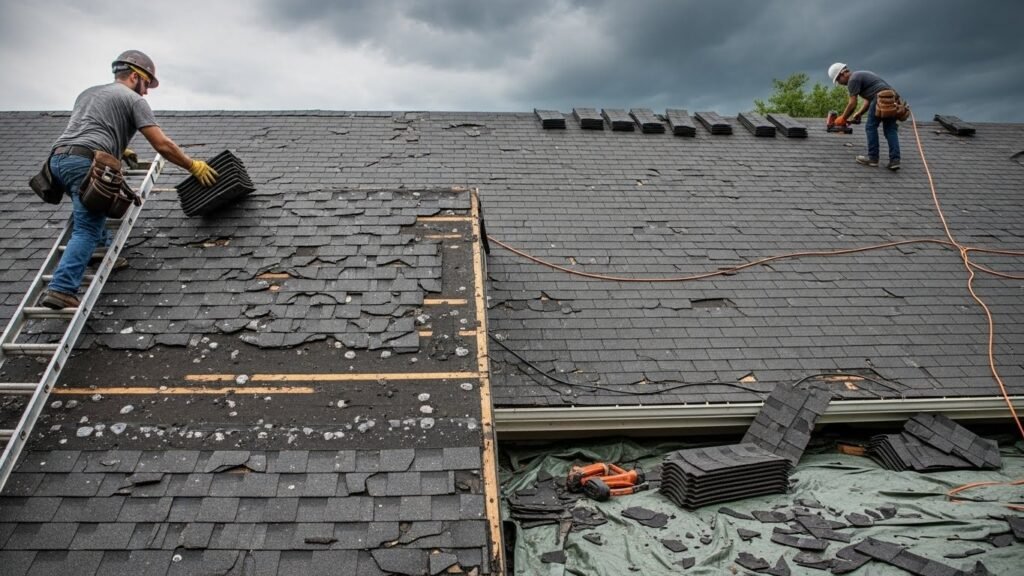
- Shingle Damage: Shingle damage from storms often appears as cracks, curling edges, or missing pieces where wind has lifted or torn shingles away. Hail can bruise or break the surface, knocking off protective granules. These defects expose the underlayment and roof deck, allowing water intrusion, hidden leaks, and serious premature roof failure.
- Structural damage occurs when high winds, heavy snow loads, or falling trees stress the roof’s framework. Trusses and rafters can crack, twist, or bow, shifting weight unevenly across the structure. Over time, this hidden damage may cause sagging rooflines, interior cracks, serious safety risks, or partial structural failure for occupants.
- Gutter damage is a common form of roof storm damage. High winds, hail, and debris can bend, detach, or clog gutters and downspouts, disrupting proper water drainage. When gutters overflow or pull away from the fascia, water can back up under shingles, erode foundations, and increase the risk of interior leaks.
| Type of Storm Damage | Affected Materials | Common Signs of Damage | Impact on Roof Longevity |
| Hail | Asphalt shingles, metal roofs | Dents, cracks, holes | Reduced lifespan, leaks |
| Wind | Shingles, tiles, flashing | Missing shingles, damaged flashing | Structural weakness, leaks |
| Water (Heavy Rain) | All materials | Water stains, sagging, leaks | Mold growth, insulation damage |
D. Signs Your Roof Needs a Full Replacement
- Extensive Shingle Damage: When more than 30% of your roof has missing, cracked, curled, or broken shingles, repairs become less effective and less economical. Large areas of damage expose underlayment and decking, increase the risk of leaks, and often indicate age-related wear, making a full roof replacement the more reliable long-term solution.
- Sagging Roof: A roofline that dips, bows, or looks uneven is a warning sign. Sagging can indicate weakened decking, failing rafters, trapped moisture, or overloading from snow and multiple shingle layers. This structural movement often means repairs are no longer enough and roof replacement is required to restore home safety
Assessing Roof Damage
A. Initial Inspection
The first step after a storm is to conduct a visual inspection of the roof. Look for visible damage like missing shingles, debris buildup, or any signs of sagging.
B. Professional Assessment
It’s crucial to hire a professional roofing contractor who can assess the full extent of the damage. They will check for hidden damage and ensure that the roof is structurally sound before recommending repairs or a full replacement.
Insurance Considerations
A. Understanding Your Policy
Most homeowners’ insurance policies cover roof damage caused by storms, but it’s important to understand your specific policy. Review the terms regarding coverage limits, deductibles, and exclusions.
B. Filing a Claim
Document the damage thoroughly and contact your insurance provider. A professional contractor may assist in filing the claim by providing an assessment report, which helps ensure your claim is processed quickly and accurately.
| Insurance Provider | Coverage Type | Claim Process | Deductible Range | Exclusions |
| Provider A | Full Roof Replacement | Easy, online submission | $500-$1000 | Neglect, wear and tear |
| Provider B | Partial Repair | Requires inspection | $300-$500 | Wind-only damage |
Choosing a Roof Replacement Contractor
A. Researching Contractors
Look for contractors with strong reputations, relevant experience, and local expertise in storm damage repairs. Check reviews, verify licensing, and confirm insurance coverage. A. Researching Contractors
B. Questions to Ask Potential Contractors
- How many years of experience do you have in storm damage roof replacement?
Ask how many years of hands-on experience the contractor has with storm damage roof replacement, not just general roofing. Look for a solid track record in your area, including past hail and wind events, familiarity with insurance claim work, manufacturer certifications, references from recent storm-related projects, and detailed written estimates.
- Can you provide a written estimate and timeline?
Ask each contractor for a detailed written estimate and projected timeline before committing. The estimate should break down materials, labor, permits, and potential extra charges. A clear start date, milestones, and completion date let you compare bids fairly, avoid hidden costs, and plan around disruptions
- What types of materials do you recommend for roof replacement?
Ask which roofing materials they recommend and why such as asphalt shingles, metal, tile, slate, or synthetic products. Have them explain expected lifespan, warranty, maintenance needs, fire and wind ratings, energy efficiency, and how each option performs in your climate and budget so you can make an informed choice.
Signs a Storm Has Damaged Your Roof
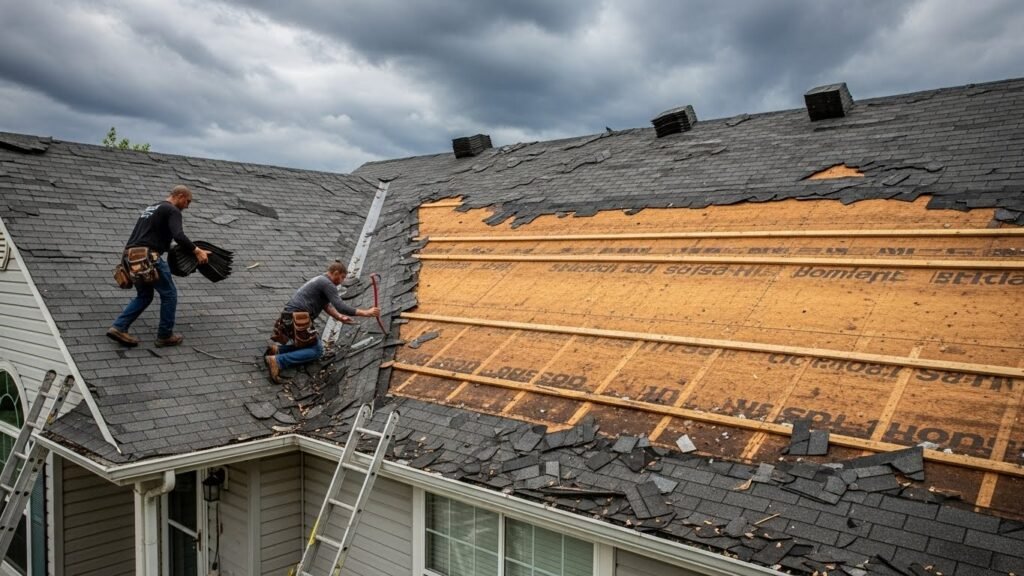
- Missing Shingles or Tiles – High winds can break the adhesive seal under shingles or lift tiles, loosening nails and fasteners. Once the wind gets under the edges, pieces can crack, snap, or be torn off. Hail and flying debris bruise or fracture roofing materials, making them more likely to fall off in later storms.
- Damaged Flashing – Flashing is the thin metal installed around chimneys, vents, skylights, and roof edges to seal joints. During storms, wind, debris, or thermal expansion can cause flashing to bend, crack, rust, or pull away from the roof. These gaps allow water to penetrate under shingles, leading to leaks and structural damage.
- Exposed Underlayment – When shingles or tiles are missing, the underlayment becomes the roof’s only barrier against rain. Underlayment is not designed for long-term exposure. UV rays, wind, and standing water quickly break it down, allowing moisture to reach the wood decking, causing rot, mold growth, insulation damage, and eventual interior leaks.
The Roof Replacement Process
A. Materials Selection
Choose roofing materials that match both the style of your home and your budget. Popular options include asphalt shingles, metal roofing, and tile roofing, all of which have different advantages in terms of durability and cost.
B. Timeline of the Project
Roof replacement typically takes 1-3 days, depending on the roof size, weather conditions, and complexity of the damage. Your contractor should provide an estimated completion date and keep you updated on progress.
Preventive Measures
A. Regular Maintenance
Preventative Roof Maintenance: The Roofing Alliance emphasizes the importance of regular roof inspections and maintenance to prevent costly repairs from storm damage. Their studies show that proactive maintenance can extend the life of your roof by 30% or more (Source: Roofing Alliance).
B. Upgrading Roofing Materials
Consider upgrading to impact-resistant materials such as Class 4 shingles, which are designed to withstand hail damage better than standard shingles.
How To Hire a Reliable Roof Contractor
- Check Reviews and References– Look for consistent 4–5 star reviews, detailed customer feedback, and photos of completed projects. Ask each contractor:
- Can you share recent references from storm-damage or insurance-related roof jobs?
- Do you have before-and-after photos of similar roofs?
- Get Multiple Estimates – Obtain at least 2–3 written estimates that clearly list materials, labor, disposal, and warranty terms. Ask:
- What materials are you using and why?
- Is this a repair or full replacement quote, and what could change the price?
- Verify Licensing and Insurance
- Can you provide proof of license and current insurance?
- Will you pull the necessary permits for this job?
Conclusion
A. Recap of Importance of Storm Damage Roof Replacement
Timely storm damage roof replacement is essential for safeguarding your property. By addressing the damage promptly, you not only prevent further structural issues but also ensure the safety and comfort of your home or business.
B. Encouragement to Take Action
If you’ve recently experienced storm damage, don’t wait for small issues to turn into expensive leaks or structural problems. Schedule a professional inspection as soon as possible. Homeowners in Orange County, CA can contact Best roofers in orange county, trusted local storm-damage specialists, at 949-561-2069 for a prompt assessment and guidance on next steps.
FAQ About Repairing a Storm-Damaged Roof
Storm damage typically includes harm caused by hail, high winds, heavy rain, or falling debris. This can result in missing or lifted shingles, cracks, dents, leaks, granule loss, or even structural damage to the roof deck. If you suspect storm damage, contact OC Roof Kings at 949-561-2069 for a professional inspection and guidance on repairs or replacement.
Yes, most homeowners’ insurance policies will cover roof repairs or replacement, depending on the extent of the damage and your specific policy details.
Yes, but it depends on the terms of your insurance policy. Review your policy’s details or consult your insurance agent for clarification.
Look for contractors with proven experience in storm damage repairs, solid customer reviews, and a reputation for quality work. Ask for references and verify their credentials. In Orange County, CA, homeowners can turn to OC Roof Kings, known for high-quality storm restoration call 949-561-2069 to schedule a n inspection.