Types of Commercial Roofing Systems—OC Roof Kings
What are commercial roofing systems?
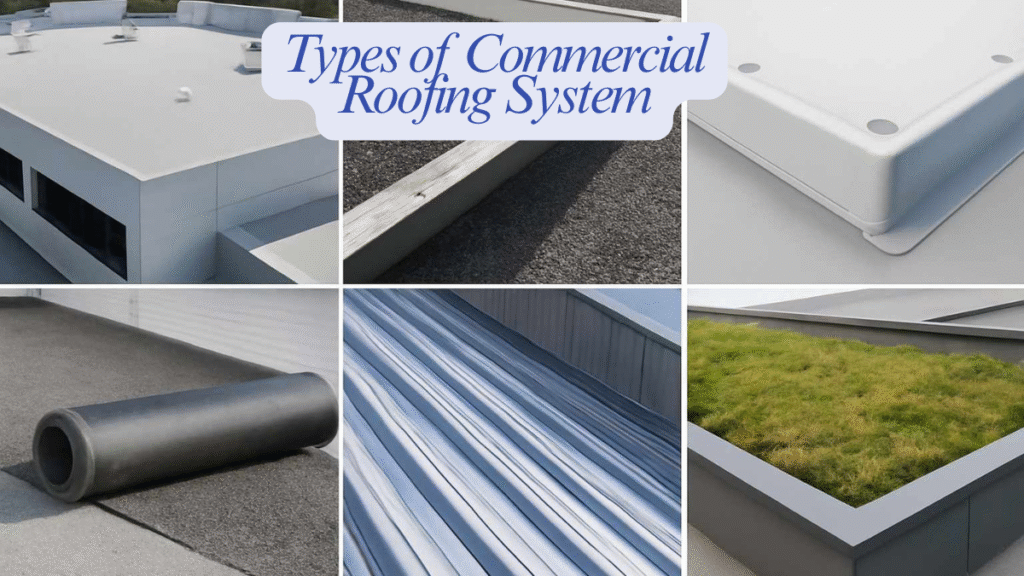
Commercial roofing systems are specific roof solutions made for buildings like offices, warehouses, shopping malls, and schools that are used for business, industry, or institutions. Commercial roofs are frequently bigger, more complicated, and built to withstand certain loads, weather conditions, and energy efficiency standards. This is different from residential roofs. These roofs not only keep the building safe from the weather, but they also help save energy, look good, and make the building last longer. At OC Roof Kings, we supply different commercial roof types, including metal roofing systems, built-up roofing systems, and single-ply roofing alternatives including EPDM and TPO roofs. We know a lot about commercial roofing materials and how to use them, so we can meet the needs of any commercial property, whether you need a flat roof or a low-slope roof system. We also provide commercial roofing services like roof replacement and repair, roof coatings, and maintenance to make sure your roof lasts for many years. It’s very important for any business structure to have the correct roofing system. With our years of experience in the roofing industry, we can help you figure out what the ideal roofing option is for your needs.
Why it’s important to pick the correct roofing system.
Choosing the correct commercial roofing system is very important for owners and managers of buildings. The roof is one of the most significant parts of a commercial property because it affects how well the building is protected, how much energy it uses, and how much care it needs. A good roofing system can help businesses save money on energy bills, save expensive repairs, and raise the value of their building.
Recent market research shows that the global commercial roofing market was worth USD 25.41 billion in 2025 and is expected to expand at a pace of 4.92% each year. This shows that there is a lot of demand for roofing solutions that are both durable and effective businessresearchinsights.com.
4 Commercial Roof Types We Install
| Roofing Type | Typical Use | Lifespan | Energy Efficiency | Key Strength |
| Modified Bitumen | Low-slope commercial | 20–30 yrs | Moderate | Reinforced protection & durability |
| EPDM | Large low-slope roofs | 30–50 yrs | Moderate | UV/weather resistance |
| TPO | Commercial & industrial | 20–30 yrs | High (cool roof) | Heat-welded seams, reflectivity |
| Asphalt Shingle | Residential steep-slope | 20–30 yrs | Varies | Affordability & aesthetics |
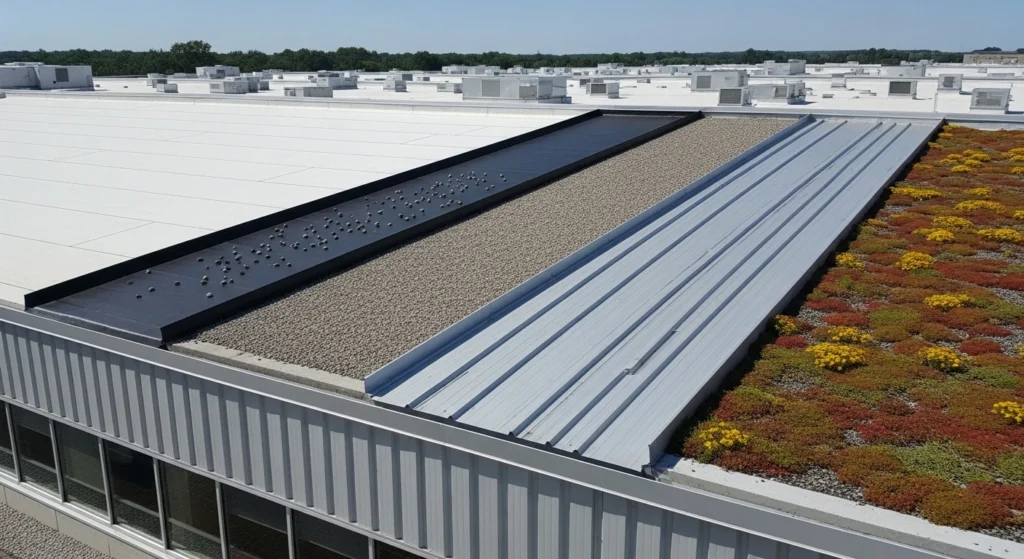
Different kinds of commercial roofing systems
A. Systems for flat roofs
Most commercial structures have flat roofs. These roofs have a very little slope, which makes it easy to install HVAC systems, solar panels, and other equipment. Some of the materials that can be utilized for flat roofs are Ethylene Propylene Diene Monomer (EPDM), Thermoplastic Polyolefin (TPO), Polyvinyl Chloride (PVC), and bitumen-based compounds.
Advantages and Challenges
Pros: Flat roofs are cost-effective, easy to install, and provide additional space for utilities. They are ideal for commercial buildings with large flat surfaces like warehouses and factories.
Cons: They require proper drainage systems to avoid water pooling, which can cause leaks and structural damage. Regular maintenance is essential to extend the lifespan.
B. Systems for pitched roof
Because pitched roofs have a slope, rain and snow may readily run off. You can typically find pitched roofs on schools, shopping malls, and other commercial buildings. Asphalt shingles, metal panels, slate, and clay tiles are some of the most common materials used for these roofs.
Advantages and Challenges
Pros: Pitched roofs are useful for places that get a lot of rain or snow because they keep water from building up. They also tend to last longer and look good on important buildings.
Cons: They cost more to install than flat roofs, and they are often harder to keep up with, especially in places with a lot of snow or bad weather.
C. Green Roof Systems
Living roofs, or green roofs, are a good choice for business buildings since they are good for the environment. There is a waterproof membrane, a drainage system, and a growth medium on top of these roofs that is covered in plants. Green roofs provide many benefits, such as keeping buildings warm, managing rainwater, and making them look better.
Advantages and Challenges
Pros: Green roofs make buildings better at keeping heat in, which lowers energy expenses. In cities, they also assist control stormwater runoff, lower the effects of urban heat islands, and make more green space.
Cons: The cost of installation is higher at first, and the structure may need to be reinforced to withstand the weight of the plant material. To keep plants healthy, they also need regular care.
The California Academy of Sciences in San Francisco is a great example of a structure that uses green roofing. This roof makes the building more environmentally friendly and shows others how to build in an environmentally responsible way.
D. Cool Roofs
Compared to regular roofs, cool roofing systems are designed to reflect more sunlight and absorb less heat. White TPO or special coatings that reflect light are typically used to make these roofs. Cool roofs help keep heat from getting in, which saves a lot of electricity in hot places.
Pros: Cool roofs help keep the inside of a building cooler, minimize the expense of air conditioning, and make the roof last longer by reducing heat stress. They also help the environment by lowering the effects of urban heat islands.
Cons: Cool roofs might not work as well in colder areas where keeping heat is crucial.
Things to think about when picking a commercial roofing system
A. Type of building and structure
The kind of commercial building (such a warehouse, office building, or store) can effect the choice of roof. Flat roofs are great for big structures with a lot of room, while pitched roofs could be better for smaller buildings or ones that are more focused on looks.
B. The weather and climate
The weather is a big factor in choosing a roofing system. For instance, pitched roofs are better for places that get a lot of rain or snow, whereas cool roofing systems are better for hot places.
C. Things to think about when it comes to money and costs
Cost is one of the most crucial things to think about while choosing a roof. Think about both the expense of installing it and the savings on maintenance and energy over time. For example, flat roofs are usually cheaper to buy, but they may need more care.
D. Saving energy
Roofing systems that save energy can cut down on heating and cooling expenditures by a lot. Cool roofs and green roofs are examples of materials that assist control temperature and lower the need for HVAC systems.
E. How it looks
When choosing a roofing system for a business structure that is easy to see, looks may be a factor. For example, pitched roofs made of metal or slate can make a structure look better.
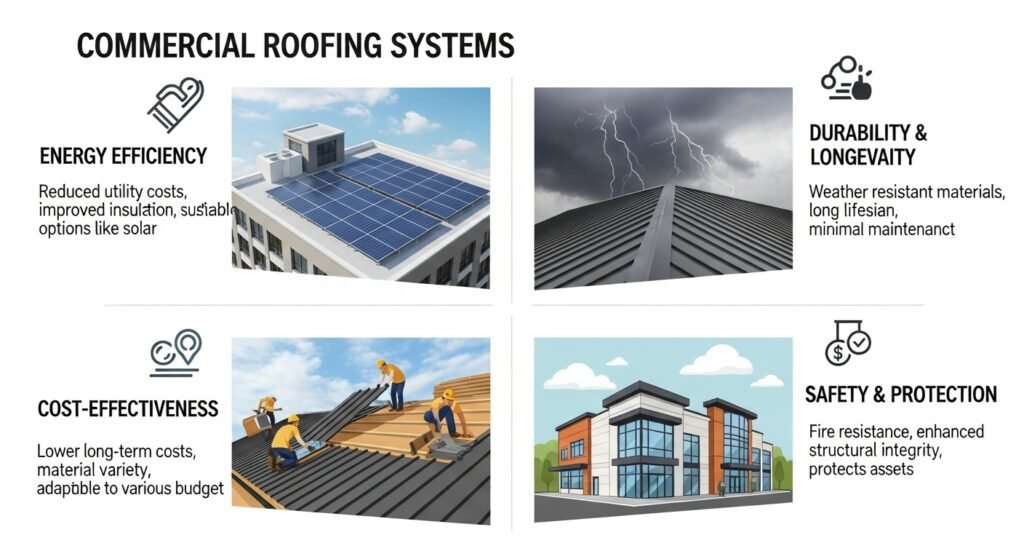
Advantages of Commercial Roofing Systems
A. Lasting and strong
If you take care of them, commercial roofing systems can last anywhere from 20 to 50 years, depending on the material. For instance, TPO roofs usually last 20 to 30 years, but metal roofs might endure more than 50 years.
B. Saving energy
Cool roofs and green roofs are two types of roofing solutions that can save a lot of money on electricity. Green roofs keep your home warm in the winter and cool in the summer, while cool roofs reflect sunlight, which cuts down on the need for air conditioning.
C. Needs Little Maintenance
Some roofing systems, like EPDM and TPO, don’t need much upkeep, so they’re great for businesses that don’t have a lot of time to spend on maintenance. To make any roofing system last longer, it needs to be checked and fixed on a regular basis.
D. Higher Value of Property
A good roof makes a commercial property worth more. When looking at a building, buyers often think about the roof’s condition because it might be expensive to replace
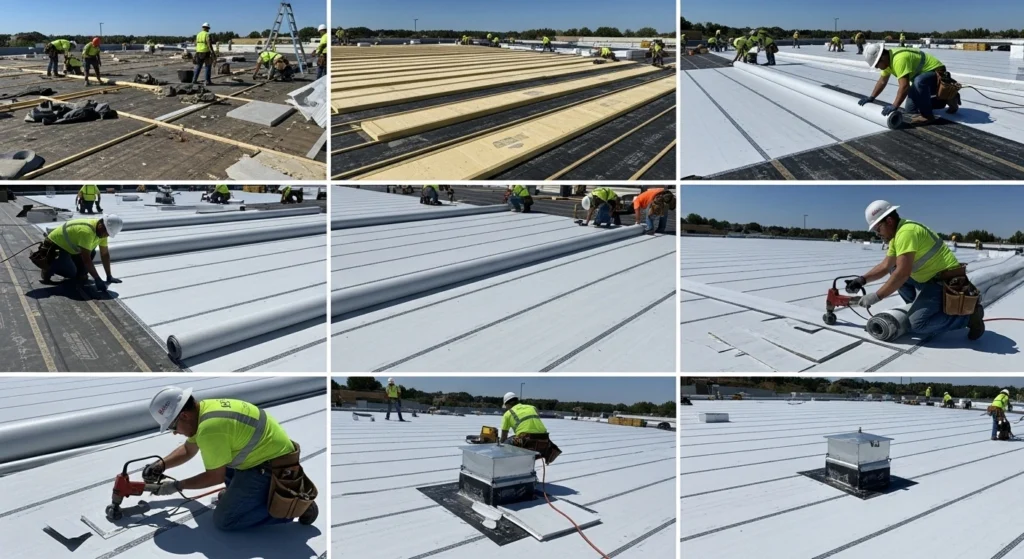
How to Install Commercial Roofing System
A. Evaluation Before Installation
A full evaluation of the building’s construction and roofing needs is done before installation. This means examining the roof’s condition, looking for structural issues, and making sure the materials will work together.
B. Choosing the Right Material
Choosing the right roofing material is quite important. To make sure the correct material is chosen for the work, things like the weather, the purpose of the building, and how it looks are taken into account.
C. How to Install
Different roofing systems have different ways to install them. For instance, a membrane is usually used to build and seal flat roofs, while pitched roofs are built with layers of materials to make sure that water flows off properly.
D. Check after installation
After the roof is put up, we check it carefully to make sure it meets all the rules and works as it should. Finding possible leaks, making sure the insulation works, and checking that all the seams are sealed.
A. Finding Common Issues with Commercial Roofing Systems
Leaking, water pooling, holes, and bad insulation are all problems that happen a lot. Regular inspections can help find problems early, which can save you money on repairs later.
B. Maintenance to avoid problems Advice for Commercial Roof Systems
Cleaning gutters, checking seams, and looking for signs of wear and tear are all parts of preventative maintenance. These things assist keep the roof strong and working well for a long time.
C. When to Hire a Professional Roofer for Your Business Roof
If problems are happening even after routine maintenance, you should talk to a professional roofing contractor. Professionals can find and address problems that the owner of the property might not be able to see.
Call OC Roof Kings at (949)561-2069 for professional help
Conclusion
The type of environment, the type of building, and the budget are all important aspects to think about when choosing the correct commercial roofing system. There are pros and downsides to every type of roofing system, and you need to think about these things carefully before choosing the finest one. They know all the many types of commercial roofing materials that are out there. Call us at (949) 561-2069 or go to our website, ocroofkings.com, for all your roofing needs.
Frequently Asked Questions (FAQ’s)
The best roofing material for commercial buildings depends on factors like climate, budget, and building type. Popular options include TPO for energy efficiency, EPDM for durability, and metal for longevity. Each offers unique benefits in terms of cost, insulation, and maintenance needs.
The most common roofing systems for commercial buildings include flat roofs (TPO, EPDM, PVC), sloped roofs (asphalt shingles, metal, clay tiles), and green roofs. Each offers unique benefits like energy efficiency, durability, and cost-effectiveness, tailored to building needs and climate conditions.
EPDM (Ethylene Propylene Diene Monomer) is more durable and cost-effective for commercial roofs, offering excellent resistance to UV, weathering, and ozone. TPO (Thermoplastic Olefin) is energy-efficient and reflects sunlight well, reducing cooling costs. Both materials are reliable, but EPDM is often preferred for long-term durability.
Marketable roofing refers to roofing systems designed for commercial or industrial properties, prioritizing durability and cost-efficiency. In contrast, domestic roofing focuses on residential homes, emphasizing aesthetics and comfort. Marketable roofing often uses materials like metal, while domestic roofs may use shingles or tiles.
A marketable roof typically adds $10,000 to $20,000 to a home’s value, depending on materials, age, and condition. Factors like roof type, maintenance, location, and the local real estate market significantly impact its potential value increase.