Types of Commercial Roofing: Systems, Pros & Cons | OC Roof Kings
What is commercial roofing?
Commercial roofing refers to the roof system that covers businesses like offices, warehouses, and stores. These roofs are made to keep the building safe from the weather, keep it warm, and make sure it stays strong. Commercial roofs usually use different materials and building methods than residential roofs because they need to support bigger and more complicated buildings.
How important it is to choose the right type
Choosing the right type of commercial roofing is essential for maintaining the building’s energy efficiency and structural integrity. To minimize repair costs and avoid early failure, it’s important to consider factors such as the local climate, the building’s structure, the cost, and the roof’s lifespan. Working with the best roofing company in Orange County, CA can help you make informed decisions about the most suitable roofing material for your needs. This expert guidance ensures that you select a roofing solution that will deliver long-term performance and value for your commercial property.
Common Types of Commercial Roofing
Flat Roofing
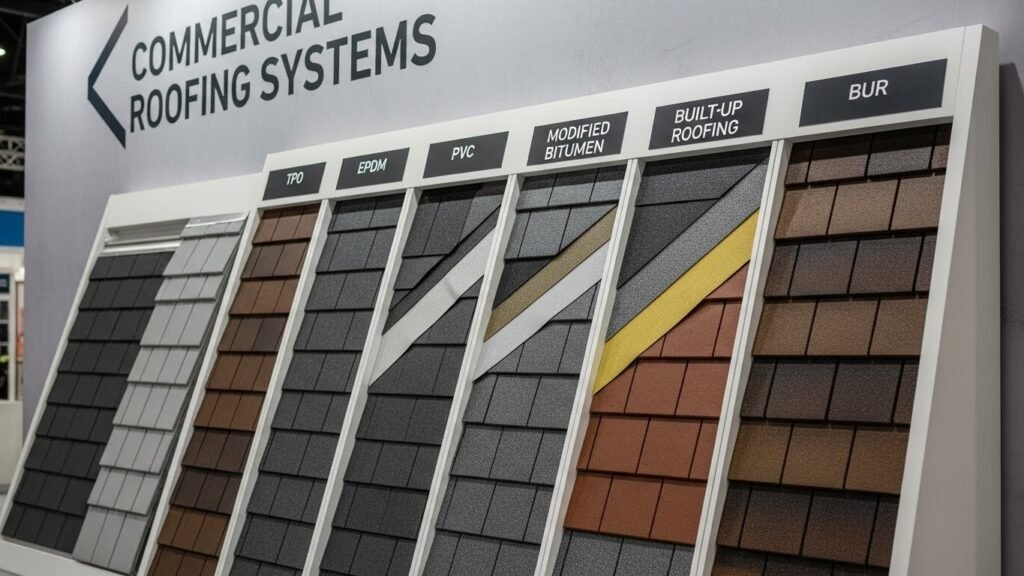
Built-Up Roofing (BUR)
There are many layers of bitumen (asphalt or tar) and reinforcing fabrics in built-up roofing. Because it lasts a long time and doesn’t wear out easily, it’s a popular choice for flat-roofed commercial buildings.
Modified Bitumen Roofing
Modified bitumen is similar to BUR but uses a modified asphalt to enhance flexibility and waterproofing. This roofing type can be applied with heat or cold adhesives, making it versatile.
Single-Ply Roofing
Single-ply roofing is a single layer of synthetic material that’s resistant to UV rays and chemicals.
a. Thermoplastic (TPO)
TPO roofing saves energy and doesn’t wear down easily. It is commonly used in commercial buildings because it is cheap and easy to install.
b. Ethylene Propylene Diene Monomer (EPDM)
EPDM is a type of rubber roofing that lasts a long time and is very strong. Because it can handle extreme weather and temperatures, it is often used in commercial buildings.
c. Polyvinyl Chloride (PVC)
PVC is another kind of single-ply membrane that is resistant to UV rays and does a great job of keeping water out. It works best for buildings in places where it rains a lot.
Sloped Roofing
Metal Roofing
- Metal Roofing
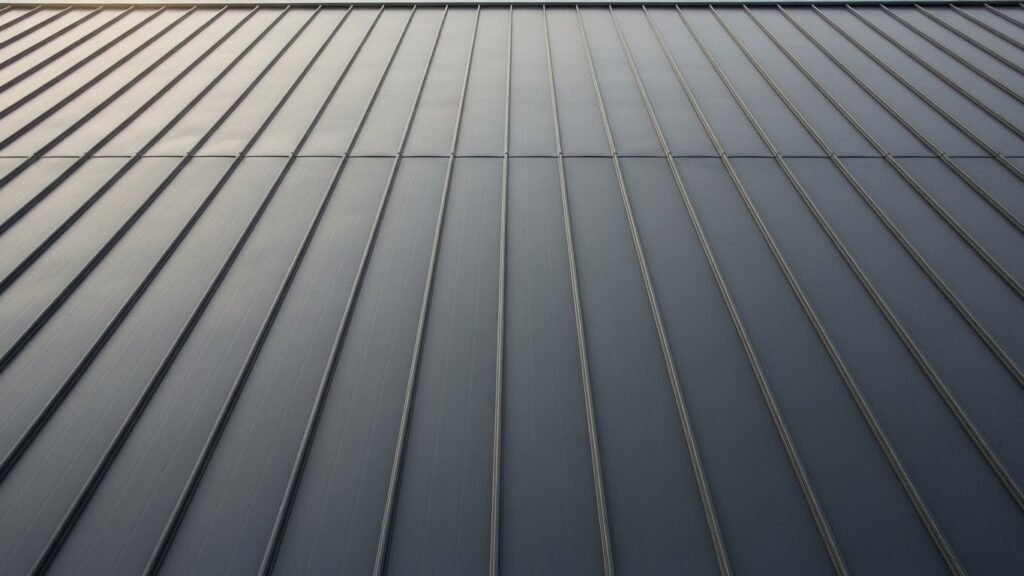
Metal roofs are durable, long-lasting, and energy efficient. They are commonly used in commercial settings for their ability to withstand harsh weather and their fire resistance.
Shingle Roofing
- Shingle Roofing
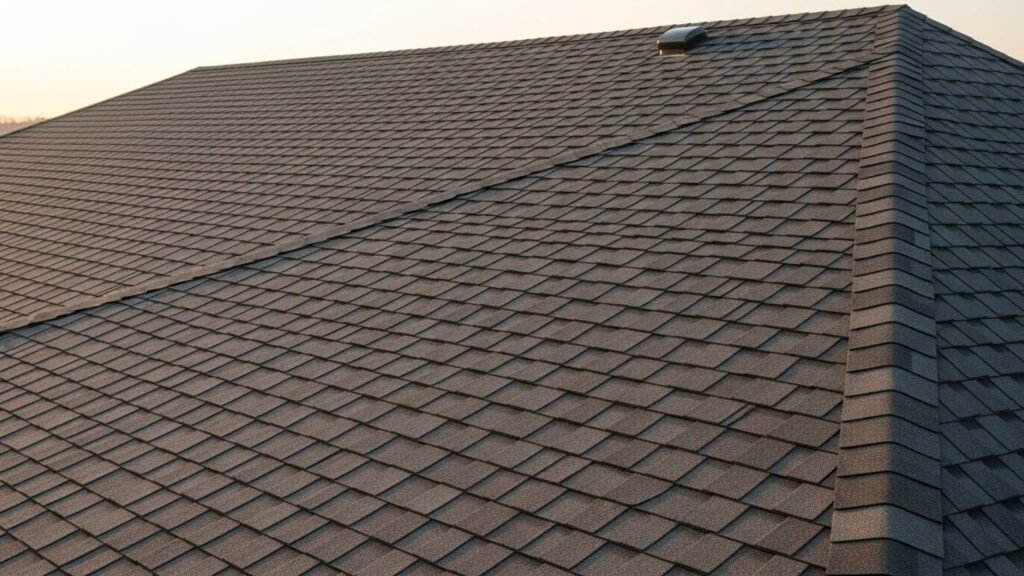
Shingles are a popular choice for smaller commercial buildings because they look classic. They are made of fiberglass or asphalt, which makes them a cheap way to roof a house.
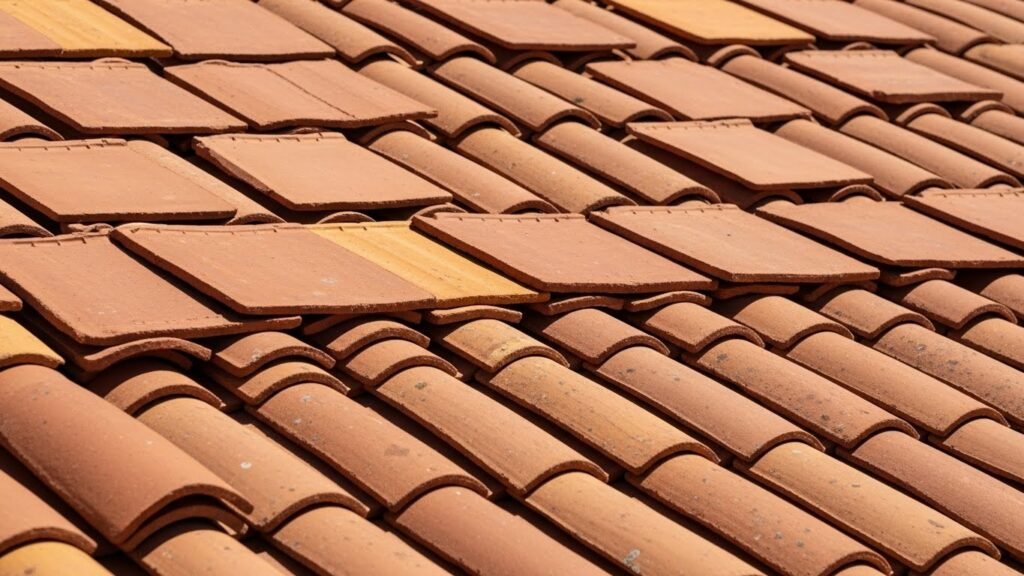
Tile Roofing
- Tile Roofing
Tile roofs, often made from clay or concrete, are known for their longevity and visual appeal. They are especially useful in areas prone to extreme heat and fire.
Green Roofing
Plants cover green roofs, or living roofs, to soak up rainwater and keep the roof from getting too hot. These roofs help the environment, lower energy costs, and make the air better.
Cool Roofing
The purpose of cool roofs is to reflect more sunlight and absorb less heat. This makes the building’s cooling costs lower because the roof doesn’t hold as much heat. This is why many environmentally friendly businesses choose this option.
Factors to Consider When Choosing Commercial Roofing Types
A. Climate and Weather Conditions
Different types of roofing work better in different weather conditions. For example, TPO and EPDM work well in places that get a lot of sun, and green roofs are great for keeping heat from getting into buildings in hot climates.
B. Building Structure and Design
The shape of the building affects roofing material choice. Flat roofs may be better suited to BUR or modified bitumen, while sloped roofs are ideal for tile or metal roofing.
C. Budget and Cost Considerations
The cost of the first purchase, upkeep, and energy savings should all be taken into account when making a choice. TPO and other single-ply roofing materials are often the best choice for a roof that is both cheap and long-lasting.
D. Maintenance Requirements
Consider how much time and money you are willing to spend on roof maintenance. Metal and tile roofs are low-maintenance, while flat roofs may require more frequent inspections and repairs.
Advantages and Disadvantages of Each Type
A. Flat Roofing
Advantages: Low installation cost, easy access for maintenance, ideal for large commercial buildings.
Disadvantages: Prone to pooling water, requires frequent maintenance to avoid leaks.
B. Sloped Roofing
Advantages: Better for shedding rainwater and snow, durable, and offers more aesthetic options.
Disadvantages: Higher installation costs, more complex maintenance.
C. Green Roofing
Advantages: Eco-friendly, reduces energy costs, enhances building aesthetics.
Disadvantages: High initial cost, requires ongoing maintenance to ensure vegetation health.
D. Cool Roofing
Advantages: Lowers cooling costs, environmentally friendly, extends roof lifespan.
Disadvantages: May not be ideal in colder climates, initial installation costs can be higher.
| Roofing Type | Key Advantages | Key Disadvantages |
| Flat Roofing (BUR & Mod Bit) | Durability & Longevity: Proven track record (BUR); Good resistance to structural movement (Mod Bit) | Installation: BUR application can be messy and time-consuming. Drainage: Poor drainage and debris collection are common issues. |
| Flat Roofing (Single-Ply) | Cost-Effective: TPO is economical. Energy Efficiency: TPO and PVC are highly reflective. Longevity: EPDM can last up to 40 years. Chemical Resistance: PVC excels for restaurants/factories. | Vulnerability: EPDM can be sensitive to punctures and tears as it ages. Quality Variability: TPO quality can vary significantly by manufacturer. |
| Sloped Roofing (Metal) | Extreme Longevity: 40-70 year lifespan. Resilience: Highly resistant to fire, wind, and hail. Sustainability: Made from recycled materials. | Upfront Cost: Higher initial investment than single-ply or shingle systems. Installation: Can be noisy during installation. |
| Green Roofing | Sustainability: Excellent insulation and reduced carbon footprint. Stormwater Management: Reduces water run-off. Aesthetics: Highly attractive and unique design. | Weight: Requires significant structural support. Maintenance: Needs regular gardening/plant care. Cost: Highest initial installation cost. |
Source of Data
- National Roofing Contractors Association (NRCA)
The NRCA is one of the most reputable organizations in the roofing industry. It provides detailed resources on commercial roofing materials, best practices, and roofing system evaluations, making it a credible reference for understanding the types of commercial roofing and their benefits.
Source: National Roofing Contractors Association, “Types of Commercial Roofing Systems”,www.nrca.net - Energy Star
For roofing types like cool roofs and their energy efficiency benefits, Energy Star is a leading resource. It offers data on how reflective roofing systems can reduce cooling costs and improve energy efficiency in commercial buildings.
Source: U.S. Environmental Protection Agency (EPA), “Cool Roofs” (Energy Star),www.energystar.gov - Roofing Contractor Magazine
Roofing Contractor Magazine is a well-respected industry publication that covers the latest trends, materials, and techniques in commercial roofing. It’s an excellent source for understanding the advantages and challenges associated with different roofing types, like EPDM, TPO, and BUR systems.
Source: Roofing Contractor Magazine, “Best Roofing Systems for Commercial Buildings”,www.roofingcontractor.com
Conclusion
Summary of Key Points
The commercial roofing system you choose will depend on your building’s design, climate, budget, and maintenance preferences. Flat roofing systems like TPO or EPDM are ideal for cost-conscious owners, while sloped roofing provides aesthetic and durability benefits. Green and cool roofs are excellent eco-friendly choices.
Final Recommendations
Consulting a professional roofing contractor like OC Roof Kings can help ensure that you select the right roofing system based on your building’s unique needs. With expert advice, you can make an informed decision that balances longevity, energy efficiency, and maintenance costs.
FAQ About Types of Commercial Roofing
Single-ply roofing systems such as TPO and EPDM are among the most common choices for commercial buildings due to their affordability, ease of installation, and durability.
EPDM lasts longer and can handle extreme weather, while TPO is better for hot climates because it reflects heat and saves energy. Depending on the weather and the needs of the building, either one could be better.
If your roof leaks a lot, shows signs of wear and tear, or has reached the end of its expected life (usually 20 to 30 years), it may be time to get a new one.
The cost for metal roof repairs varies based on the extent of the damage. On average, expect to pay between $300 and $1,500 for minor repairs, with more extensive damage costing up to $5,000.
Both TPO and PVC are single-ply roofing materials. PVC is more durable and offers better resistance to harsh chemicals, while TPO is more flexible and energy-efficient.